Why Did the Plane Climb Away Instead of Landing? A Pilot Explains the Go-Around
Why Did the Plane Climb Away Instead of Landing? A Pilot Explains the Go-Around
A go-around is a planned maneuver in which the crew stops the approach, applies full thrust and climbs away to set up for another landing. It is not an emergency, it is not a near miss, and it is not a sign that anything broke. On the flight deck it is the most briefed maneuver of the whole flight, rehearsed before every single approach, and it happens on roughly one landing in 250 at busy airports. What feels to you like the moment something went wrong is, from our seat, the moment the system worked exactly as designed.
What just happened in those fifteen seconds
Let us start with what you actually experienced, because the sequence is always the same and it explains most of the fear.
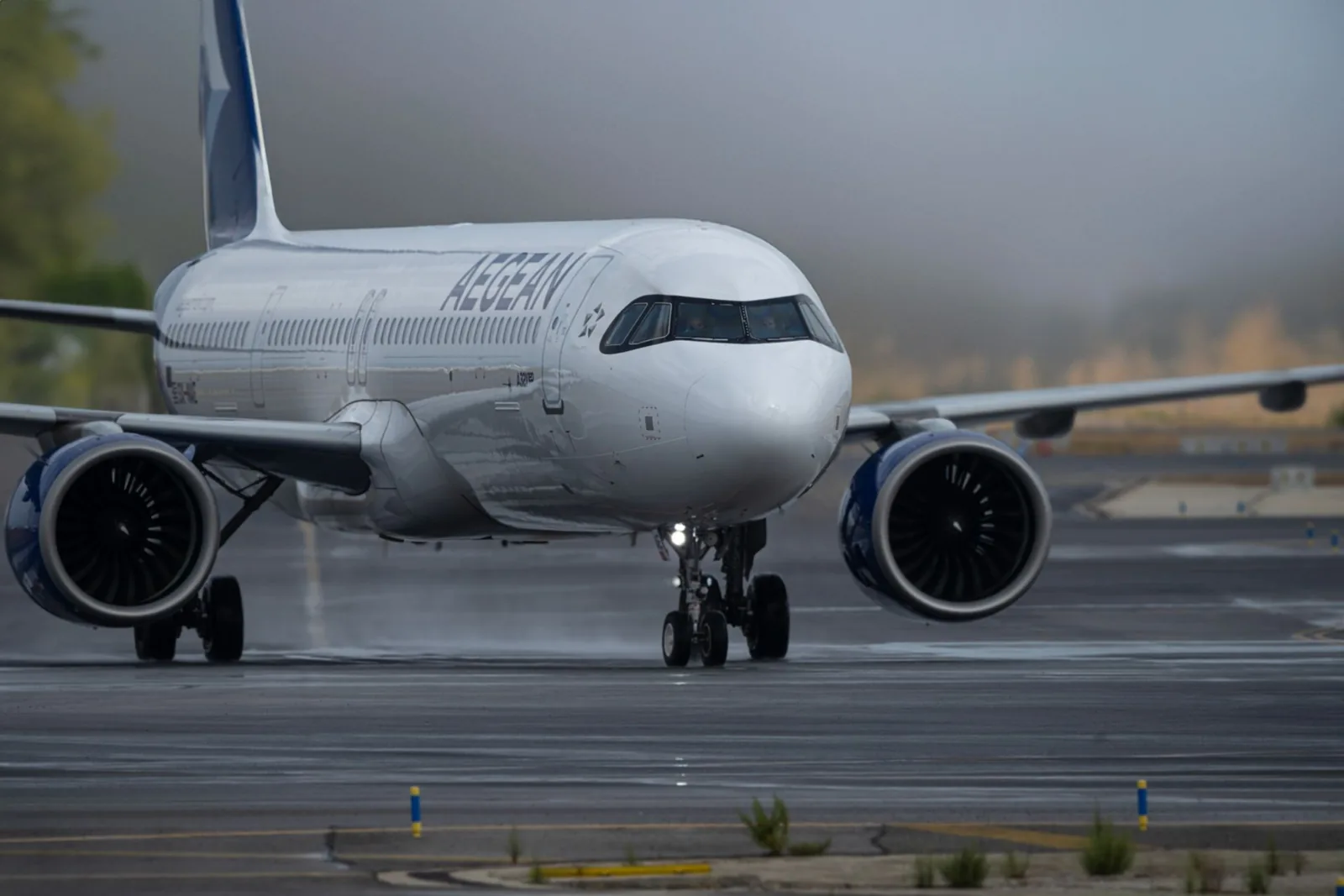
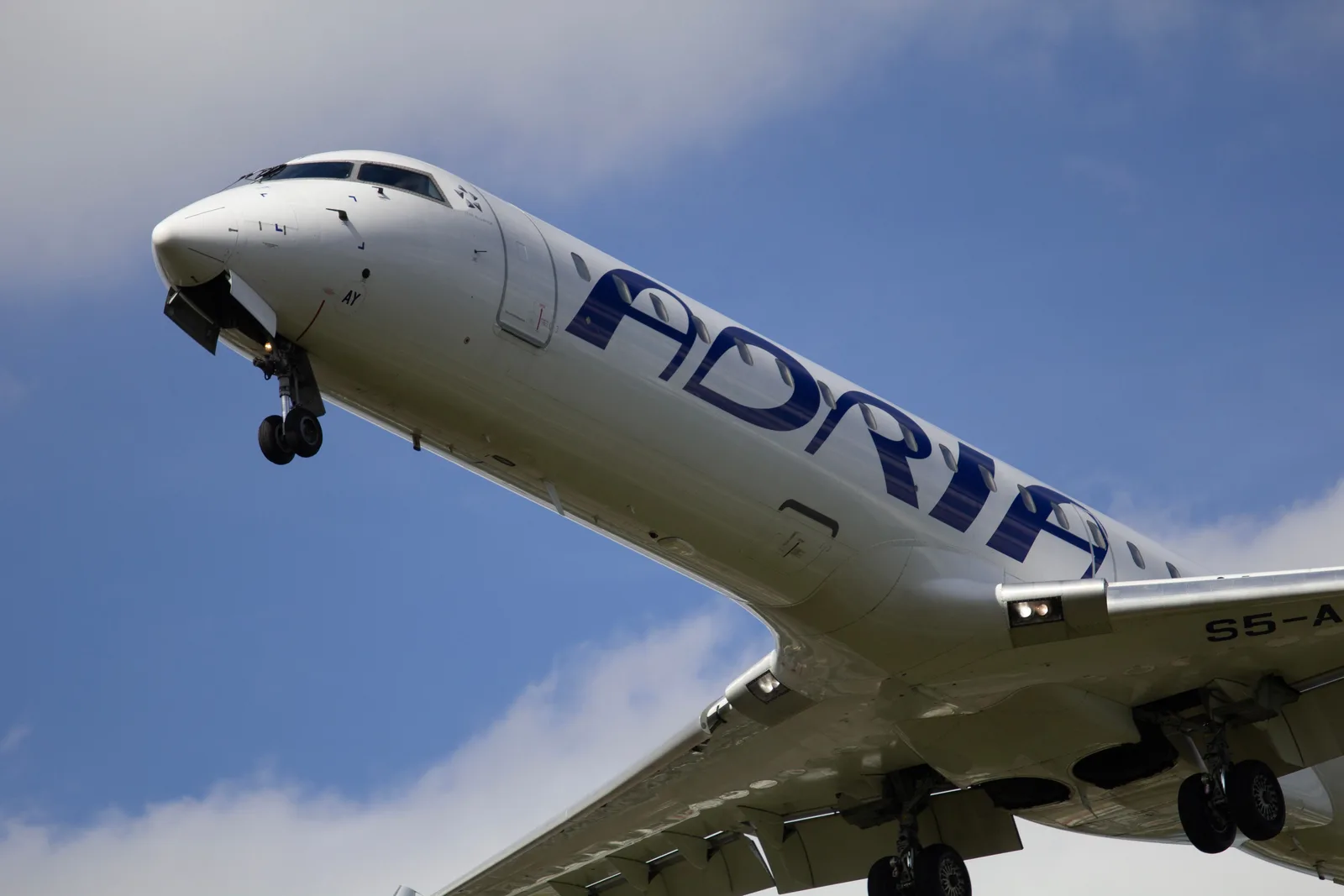
The aircraft was low, gear down, flaps out, engines quiet. The ground was close enough to read the markings on the roofs. Then the engines went from near idle to something close to takeoff thrust in about two seconds, the nose came up, you were pressed back into the seat, and the runway that was right there slid away under the wing. A few seconds later came a heavy clunk as the landing gear came back up, the aircraft banked, and then nothing. No announcement for what felt like a very long minute.
That silence is the part people remember. It is not the crew hiding something. It is the crew doing four things at once in a very short window: flying the aircraft, reconfiguring it, talking to air traffic control, and working out where they are being sent next. The announcement comes when the workload drops, usually a minute or two later, and it is almost always some version of "we were not quite set up for that one, we are going to come round and do it again".
A go-around is a decision, not a reaction
Here is the detail that changes how the whole thing feels. We brief the go-around before we brief the landing. On every approach, on every flight, without exception.
Somewhere between twenty and ten minutes before touchdown, the pilot flying runs through the approach out loud: the runway, the weather, the speeds, the minimum altitude at which the landing must be abandoned, and then the missed approach procedure. Which heading, which altitude, which navigation point, what the other pilot will do, what the automation will do. All of it is said out loud and agreed before the aircraft is anywhere near the ground.
So when the go-around happens, nobody is improvising. The crew is executing a procedure they described ten minutes earlier and have flown hundreds of times in the simulator. Airline pilots practise go-arounds in nearly every simulator session, including the awkward ones with an engine out or with the automation misbehaving. It is not the emergency drill. It is the default option, always available, and the training message drilled into every airline crew is the same: if the approach is not right, you do not fix it, you leave.
The five reasons it actually happens
Go-arounds look dramatic and their causes are mostly mundane. In practice, almost all of them fall into five buckets.
The runway is still occupied. This is the single most common cause at busy airports. The aircraft ahead is slower to vacate than the controller planned, or a departure is still rolling. Separation between two aircraft on a runway is not negotiable, so rather than squeeze it, one of them leaves. Patrick Smith makes this point well in his piece on aborted landings: most go-arounds are a spacing problem, and the maneuver exists precisely so that spacing problems never become anything else.
The approach is not stabilized. Airlines define a set of criteria that must all be met by a given height, typically 1,000 feet above the ground in cloud or 500 feet in clear weather: correct speed, correct descent rate, aligned with the runway, configured for landing, thrust set. If one of them is out of limits and not corrected, the approach is abandoned. Not because the landing would necessarily go wrong, but because the margin has shrunk, and we do not spend margin.
The weather moved. A gust, a wind shear alert, a sudden shift in the crosswind, a downpour that drops visibility below what is needed. Autumn is the season for this in Europe, along with low cloud and fog. If the runway lights are not in sight at the decision height, the rule is not "take a quick look", it is climb away.
Air traffic control tells us to. Sometimes the reason is on their radar screen and not visible from the cockpit at all. We do it first and ask afterwards.
Something is on or near the runway. A vehicle, an animal, a flock of birds crossing the threshold. FlightDeckFriend lists the same causes from a working pilot's point of view and puts the frequency at roughly one to three go-arounds per thousand approaches.
How often does this really happen?
This is where the numbers help, because the honest answer is: often enough that your crew has done it many times, rarely enough that most passengers only meet one every few years of flying.
Airways Magazine pulled the FAA data and found that go-arounds accounted for about 0.39 percent of arrivals at the thirty busiest US airports in 2023, which is roughly one in every 250 approaches. The spread between airports is instructive: around 0.8 percent at Washington National, a tight airport with complex airspace, against about 0.2 percent at Los Angeles, which has parallel runways and room to breathe. The number tracks airport geometry and traffic density, not danger.
Put it the other way round. A short-haul crew flying four sectors a day will fly a real go-around several times a year, and several dozen more in the simulator. By the time you experience one, the two people in front have done it so many times that it registers as an interruption to the schedule rather than an event.
What the aircraft is doing while you are gripping the armrest
The physical sequence is short and highly standardized. The pilot flying pushes the thrust levers to the go-around detent, which on most airliners also wakes up the flight director and tells the automation that the plan has changed. The nose comes up to a set attitude. The flaps come back one stage. Once there is a positive rate of climb on the instruments, the landing gear comes up, and that is the clunk you hear from your seat.
The aircraft then follows the published missed approach procedure, which is printed on the same chart as the approach itself. It is a fixed route to a fixed altitude, designed to keep the aircraft clear of terrain and of other traffic, and it existed long before your flight took off. From there the controller gives radar vectors to bring you back onto the approach, or into a holding pattern if there is a queue.
One note on the flaps, since it worries people who notice the wing changing shape twice in a minute. They are retracted in stages as the speed builds, not all at once, and the final stage waits until the aircraft is safely climbing. Nothing is being rushed.
Why it feels so violent when it is not
Your body is not wrong about what it detected, it is wrong about what it means.
On final approach the engines are at low power and the aircraft is descending gently. A go-around takes it from that state to near maximum thrust and a climb in a couple of seconds. The contrast is enormous, which is why it feels far more aggressive than the takeoff you sat through two hours earlier, even though the numbers are similar. Add the fact that it is unexpected, that nobody has explained it yet, and that your nervous system has spent the last twenty minutes waiting for the flight to be over, and you have the recipe for a genuine adrenaline spike.
The noises do not help either. Thrust increase, gear, flaps, all inside fifteen seconds, in an order you have never heard before. If the soundtrack is a large part of what unsettles you, we have gone through the whole catalogue in every airplane noise explained by a pilot.
And if you are wondering whether this means landing is the risky part after all, we have looked at the actual statistics in is landing the most dangerous part of the flight. The short version: approach and landing concentrate the accidents, and the go-around is one of the main reasons the serious ones stay rare.
What happens next, and what if it happens twice
In most cases the second approach lands normally, ten to twenty minutes after the first. The delay is annoying and entirely uneventful.
Two go-arounds on the same flight is unusual but not alarming. It usually means the weather is genuinely marginal and the airport is having a bad hour, and it means the crew is applying the same rule twice, which is reassuring rather than the opposite. Fuel is not an afterthought here: every flight leaves with fuel for the destination, fuel to fly to a named alternate airport, and a reserve on top of that. Repeated approaches eat into the margin, and when the calculation says it is time to go to the alternate, we go, which is why fog days end with passengers in the wrong city rather than with anyone pressing their luck. We explain how those minima work in can pilots land in fog.
There is an old line in aviation that gets close to the truth: a landing is a go-around that worked out. Every approach is flown with the option to leave, right up to the last moment. The crew that goes around is not the crew that got into trouble. It is the crew that declined to.
Frequently asked questions
Is a go-around an emergency?
No. It is a standard maneuver, briefed before every approach and practised constantly in the simulator. It is not recorded as an incident, it does not require a report in normal circumstances, and it does not mean anything failed. It means the conditions for a safe landing were not all present at that moment.
Why did the pilots not warn us before doing it?
Because the decision takes about one second and the first priority is flying the aircraft. The crew reconfigures, climbs, and talks to air traffic control first. The cabin announcement comes when there is a gap, usually one to three minutes later. Silence in that window is workload, not bad news.
Does a go-around mean the pilot made a mistake?
Usually not. The most common causes are outside the cockpit entirely: another aircraft still on the runway, a controller's instruction, a gust of wind. And when the cause is an approach that drifted outside its limits, going around is the correct response to it, not an admission of failure.
Can the plane run out of fuel doing this?
No. Fuel planning includes the trip, a diversion to an alternate airport and a final reserve. A go-around costs a few minutes of flying time. If repeated attempts start eating into the reserve, the crew diverts well before it becomes a problem, which is exactly what the alternate is for.
How common are go-arounds?
Roughly one approach in 250 at the busiest US airports, and between one and three per thousand approaches on typical airline figures. Rare enough that most passengers rarely see one, common enough that any working airline crew has flown many.
If the approach is the part that gets you
Knowing that a go-around is routine helps, and it rarely dissolves a fear on its own. If your heart rate climbs the moment the gear comes down, the useful work is not more aviation facts, it is learning what your body is doing and how to interrupt it.
You can start with our free fear of flying assessment. It takes a few minutes and gives you a clear read on what is actually driving your fear. If you want to go further, our online fear of flying course was built by airline pilots and psychologists, and you follow it at your own pace.
No pressure and no deadline. The door is open whenever you decide it is time.