Turbulence on a plane: different categories and consequences
Turbulence varies: Light chop, moderate, and severe categories each have distinct consequences for passengers and the aircraft.

Turbulence on a plane: different categories and consequences
No, turbulence does not bring down airliners. Aviation sorts it into four levels, light, moderate, severe and extreme, and almost all the bumps you feel on a flight are light. An airliner's structure is certified for strong gust loads, with a 50 percent safety margin on top. The real risk is to people who are not buckled in: in U.S. airline data, about four out of five serious turbulence injuries are flight attendants. Keep your seat belt fastened whenever you are seated, and turbulence stays what it is: an uncomfortable ride, not a danger.
What are the categories of turbulence on a plane?
Aviation uses four intensity levels, light, moderate, severe and extreme, and they are defined by what happens in the cabin, not by a measured distance. Pilots use this same scale when they report turbulence on the radio, so the flights behind them can plan around it. Here is what each level means in practice.
Level
What you feel in the cabin (1)
What the crew does (2)
Light
(1) A slight push against the seat belt, drinks ripple in the cup
(2) Service usually continues, the seat belt sign may come on
Moderate
(1) A clear push against the belt, walking is difficult, loose items can slide
(2) Service stops, flight attendants take their seats
Severe
(1) You are pressed hard against the belt, unsecured objects are thrown about
(2) Everyone stays seated; the pilots reduce speed and change route or altitude to get out of it
Extreme
(1) Very strong, abrupt jolts
(2) Linked to conditions crews plan around and avoid, such as the core of a strong thunderstorm
Light turbulence is by far the most common, and it is what most passengers call "a bumpy flight". Moderate turbulence is uncomfortable but routine. Severe turbulence is rare: over a full career, many airline pilots meet it only a handful of times. Extreme turbulence is the level almost no airline pilot ever experiences, because the weather that produces it is exactly what flight planning is designed to keep you away from.
Can turbulence make a plane crash?
No. An airliner is designed to fly through turbulence, and its structure is built for loads well beyond what turbulence produces in normal operations. European (CS-25) and U.S. (Part 25) certification rules require a transport aircraft to withstand 2.5 times its own weight pushing up and once its weight pushing down without permanent deformation, and they include specific cases for sharp vertical gusts. Then a 50 percent safety factor is added: the structure must carry 1.5 times those loads without breaking. Manufacturers prove it on full-size test airframes, bending the wings far past anything you will ever see from your window, before the first passenger boards.
What turbulence does is move the aircraft around inside the air. At the aircraft's center of gravity, the vertical movement is measured in inches: about 8 inches (20 centimeters) at most. The autopilot generally stays engaged, the pilots reduce to a recommended turbulence speed to keep extra margin, and they ask air traffic control for a smoother altitude. From the front seat, it is a workload question, not a survival question.
Why does it feel like the plane is dropping?
Because your inner ear senses changes in motion, not distance, and it exaggerates both. A brief downward push of a fraction of a g feels like a fall, even when the aircraft has moved only a few inches. Inside a cabin you cannot see the horizon, so the brain has nothing to compare the sensation with and fills the gap with the worst picture it can find.
That is why "air pockets" feel so real. There is no hole in the sky, only air moving up and down, as we explain in everything you've never been told about turbulence. The sensation is real. The fall is not.
What causes turbulence?
Turbulence is air moving irregularly, and it has three main sources that pilots know well. Convective turbulence comes from air rising and sinking in and around cumulus and thunderstorm clouds, and it usually shows up on weather radar. Mechanical turbulence forms when strong wind flows over mountains or buildings: over ranges like the Alps or the Rockies, it can create mountain waves felt far downwind. Clear-air turbulence happens at cruising altitude in a cloudless sky, usually near the jet stream, where layers of air moving at very different speeds slide past each other. Pilots call that difference wind shear.
A fourth, smaller source is wake turbulence, the swirling air left behind another aircraft, which air traffic control manages with spacing rules. As the FAA explains on its turbulence safety page, turbulence can occur even when the sky appears clear. That is the kind that surprises passengers, and the reason the seat belt advice never changes.
Can pilots see turbulence coming and avoid it?
Most of the time, yes, and avoiding it is part of flight planning, not improvisation. Before departure, the crew studies significant-weather charts that forecast where turbulence and jet streams are expected along the route. In flight, the weather radar shows convective cells, and pilots steer around them with wide margins.
Clear-air turbulence is the exception: no radar can see it, because there is no moisture to reflect the beam. For that, the information comes from other aircraft. Pilots report what they meet to air traffic control, and a growing number of airliners send automated turbulence data that other flights receive in near real time. When the flight ahead reports bumps at your altitude, your crew asks for a different one. No forecast is perfect, and that is precisely what the seat belt sign is for.
Who actually gets hurt in turbulence?
The people who get hurt are almost always the ones who were not strapped in at that moment, and most of them are flight attendants. According to the FAA, drawing on NTSB reports, U.S. airlines recorded 207 serious turbulence injuries between 2009 and 2024: 166 crew members and 40 passengers, over sixteen years in which U.S. airlines carried hundreds of millions of passengers every year. The NTSB's 2021 safety study on turbulence-related injuries reached the same conclusion: flight attendants, standing and working in the cabin, are the group most often injured.
When an event makes the headlines, the pattern holds. On Singapore Airlines flight SQ321 in May 2024, investigators found that occupants who were not belted in were lifted out of their seats by a series of very abrupt jolts lasting a few seconds. Many people were hurt, and the aircraft diverted to Bangkok and landed normally. The lesson pilots repeat on every flight is short: when you are seated, keep your belt fastened and snug, even with the sign off.
Is turbulence getting worse with climate change?
Probably on some routes, and that means more bumps, not a weaker aircraft. A 2023 University of Reading study found that severe clear-air turbulence over the North Atlantic increased by about 55 percent between 1979 and 2020, as wind shear in the jet stream grew stronger. Researchers expect the trend to continue.
For you, that may mean a bumpier ride on certain transatlantic flights. For the aircraft, it changes nothing: the certification margins described above do not shrink. What does improve, year after year, is forecasting and the real-time sharing of turbulence reports between aircraft.
Where should you sit to feel less turbulence?
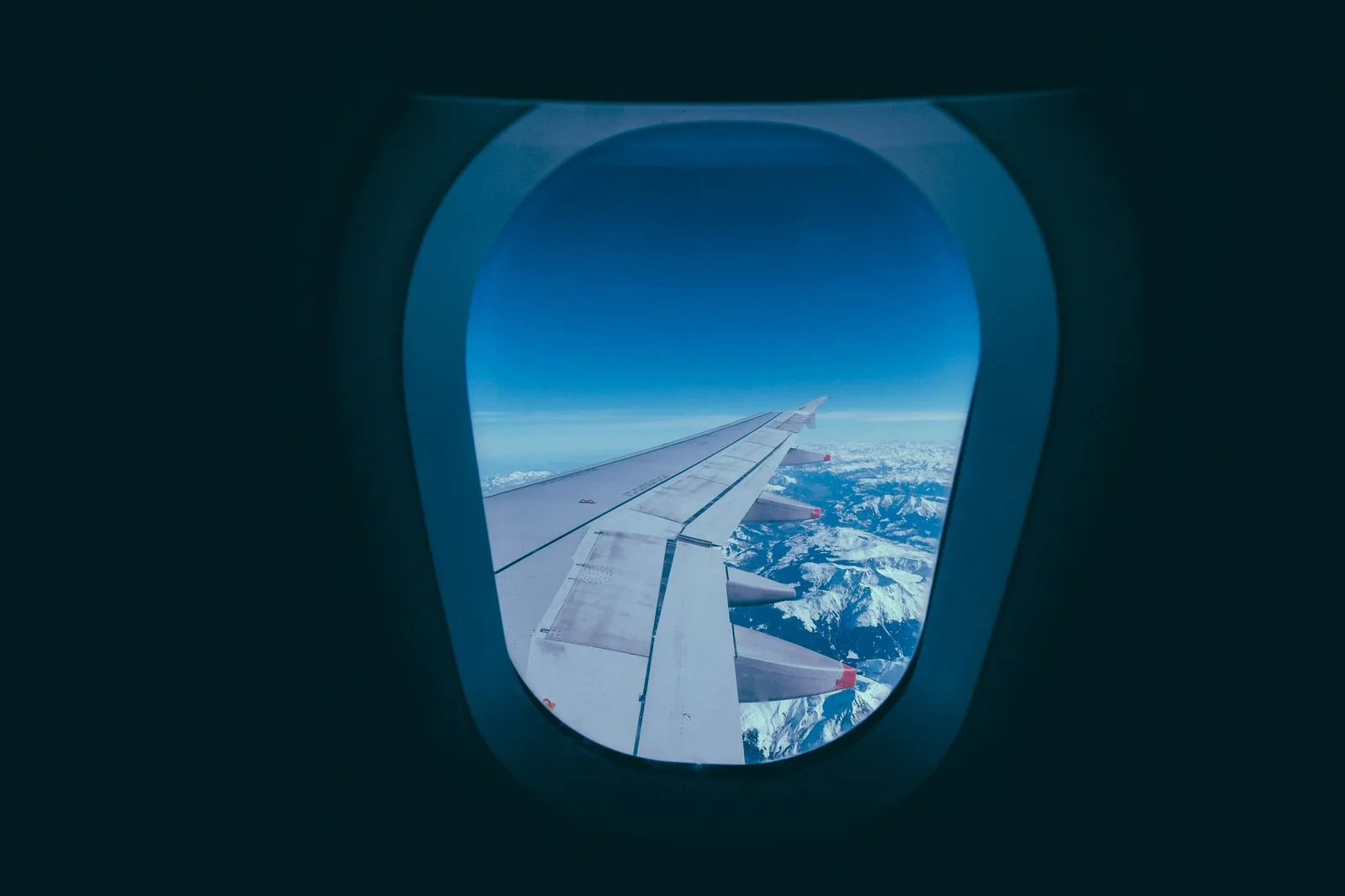
Over the wings, as close as possible to the aircraft's center of gravity. The airplane pivots around that point, so the movement is smallest there and largest at the very back of the cabin. If you can choose in advance, a seat above the wing, ideally by a window so you can see the horizon, is the best option for a nervous flyer. It will not remove the bumps, but it softens them.
What can you do during turbulence when you're scared?
Slow your breathing first, then give your mind something accurate to hold on to. Fear speeds up breathing, which feeds dizziness and a racing heart. Breathe out for longer than you breathe in, keep both feet flat on the floor, and rest your hands on the armrests instead of gripping them.
Then name what is happening: "this is light, the crew is still walking", or "this is moderate, they have sat down, that is procedure". Watch the flight attendants; their calm is information. The National Institute of Mental Health (NIMH) describes panic attacks as sudden waves of fear with strong physical symptoms, and stresses that they can be treated. If the bumps trigger one, our guide on how to handle a panic attack mid-flight takes you through it step by step. And if turbulence is the reason you avoid flying altogether, start with how to overcome your fear of flying.
Frequently asked questions about turbulence
Can turbulence flip a plane upside down?
No. In severe turbulence an airliner can roll or pitch briefly, but it is a stable machine that returns toward level flight, and the pilots or the autopilot correct the attitude within seconds. Turbulence moves the aircraft around inside the air; it does not turn it over.
How much does a plane really move in turbulence?
Much less than it feels. At the aircraft's center of gravity, the vertical movement in turbulence is about 8 inches (20 centimeters) at most. What feels like a drop is your body reacting to a brief change in acceleration, not the aircraft falling. Headlines about planes "plunging" usually describe a descent the crew chose to leave a bumpy layer.
Is it safe to go to the restroom when it is bumpy?
If the seat belt sign is off, yes, but go quickly and hold on to seat backs as you walk. If the sign is on, wait. The sign is the crew's way of telling you that they expect bumps or are already flying through them.
Do pilots get scared of turbulence?
No. Turbulence is uncomfortable, and pilots take it seriously because of the people standing in the cabin, but it is a normal part of the job. Their attention goes to the speed, the altitude, the weather ahead and the safety of the crew in the back.
Should I tell the flight attendants I'm a nervous flyer?
Yes. Flight attendants deal with anxious passengers every day and are glad to know. They can warn you when bumps are expected, explain a noise or a movement, and check on you during the flight. Telling them costs nothing and often takes half the tension away.
Want to go further?
Knowing what turbulence is helps. Feeling calm when it happens takes practice. A good first step is to see where your fear stands today: our fear of flying assessment takes less than three minutes and gives you a clear picture of your profile, with no pressure.
If you prefer to work on it at your own pace, wherever you are, the Fofly online program was designed by an airline pilot and a psychologist trained in cognitive behavioral therapy. It combines the aviation side, turbulence included, with practical techniques to manage the anxiety itself. We have no magic wand. We have explanations, a method, and people who know what you are going through.