Is Turbulence Worse in Fall and Winter? A Pilot Explains the Jet Stream
Is Turbulence Worse in Fall and Winter? A Pilot Explains the Jet Stream
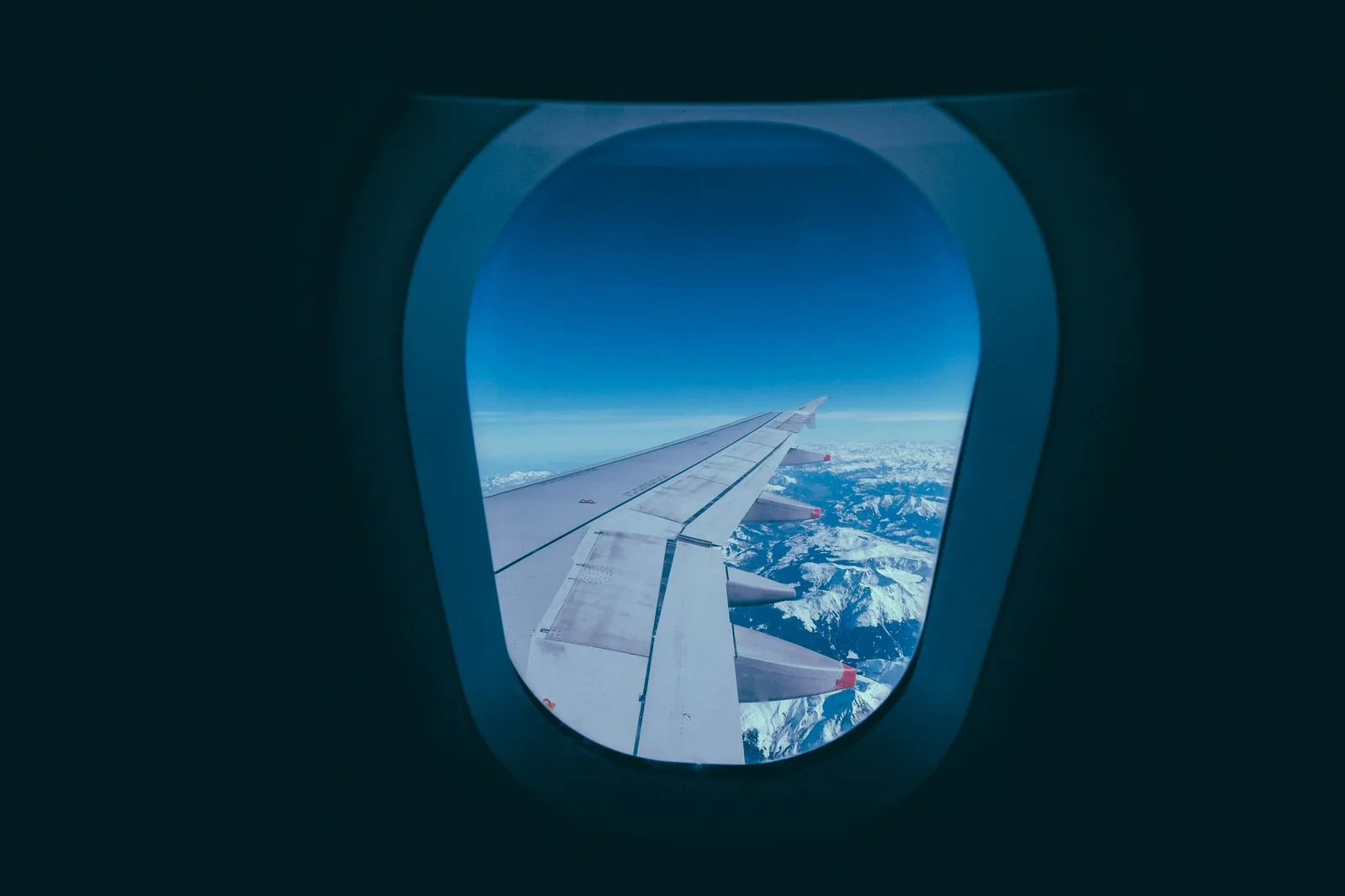
Often, yes, at cruising altitude. From fall onward the jet stream, a river of very fast wind five to seven miles up, gets stronger, and the clear-air turbulence that comes with it becomes more frequent. More frequent does not mean more dangerous: the aircraft is built for far more than this, and the pilots plan around it. What changes is the kind of bumps you feel, and one habit matters more than any forecast: keeping your seatbelt fastened.
Is turbulence really worse in fall and winter?
At cruising altitude, yes, more often than in summer, but not on every route and not on every flight. According to a University of Reading study summarized by the European Geosciences Union, clear-air turbulence has historically been more likely in winter than in summer. Summer has its own bumps, but they sit lower and at a different time of day: heat from the ground builds thermal turbulence that peaks in the late afternoon, which I explain in are morning flights really less turbulent.
So the two effects peak in opposite seasons. In July, you feel the bumps mostly in the first and last fifteen minutes of the flight. In January, you are more likely to feel them in the middle of it, at cruising altitude, under a clear sky. Neither one is a sign that something is wrong.
What is the jet stream, and why does it get stronger in the cold season?
The jet stream is a narrow ribbon of very fast wind about five to seven miles up, and it strengthens in winter because the temperature gap between the equator and the poles gets bigger. The Met Office explains that in winter the jet stream is stronger and flows over the UK, while in summer, with a smaller temperature gap, it usually sits further north.
Airlines use it on purpose. Flying with the jet stream saves time and fuel, which is why an eastbound crossing of the Atlantic is shorter than the way back. The Met Office also notes that jet streams can get rather bumpy, especially where the wind speed changes or the stream is not straight. That is the part you feel in your seat.
Why does a fast wind make the plane bump?
Because fast air rubs against the slower air next to it, and that friction creates swirls. This is wind shear turbulence. Picture a fast river running through a calm pond: at the edge, the water churns. The airplane crosses these swirls the way a boat crosses a wake. The FAA lists jet streams among the causes of turbulence, along with mountains, weather fronts and thunderstorms, and says it can happen even when the sky looks clear.
That is why it is called clear-air turbulence. There is no cloud to warn you, and it does not show on the weather radar. In my experience a patch is limited in size, and the airplane is through it in a few minutes at most.
Which flights are the most affected from fall onward?
The busiest routes under the jet stream: the North Atlantic, North America, Europe and the North Pacific. What you feel depends on your route and on where the jet stream sits that day, which changes every day. A flight from London to New York in January spends hours near it. A short hop that stays well away from it may not meet it at all.
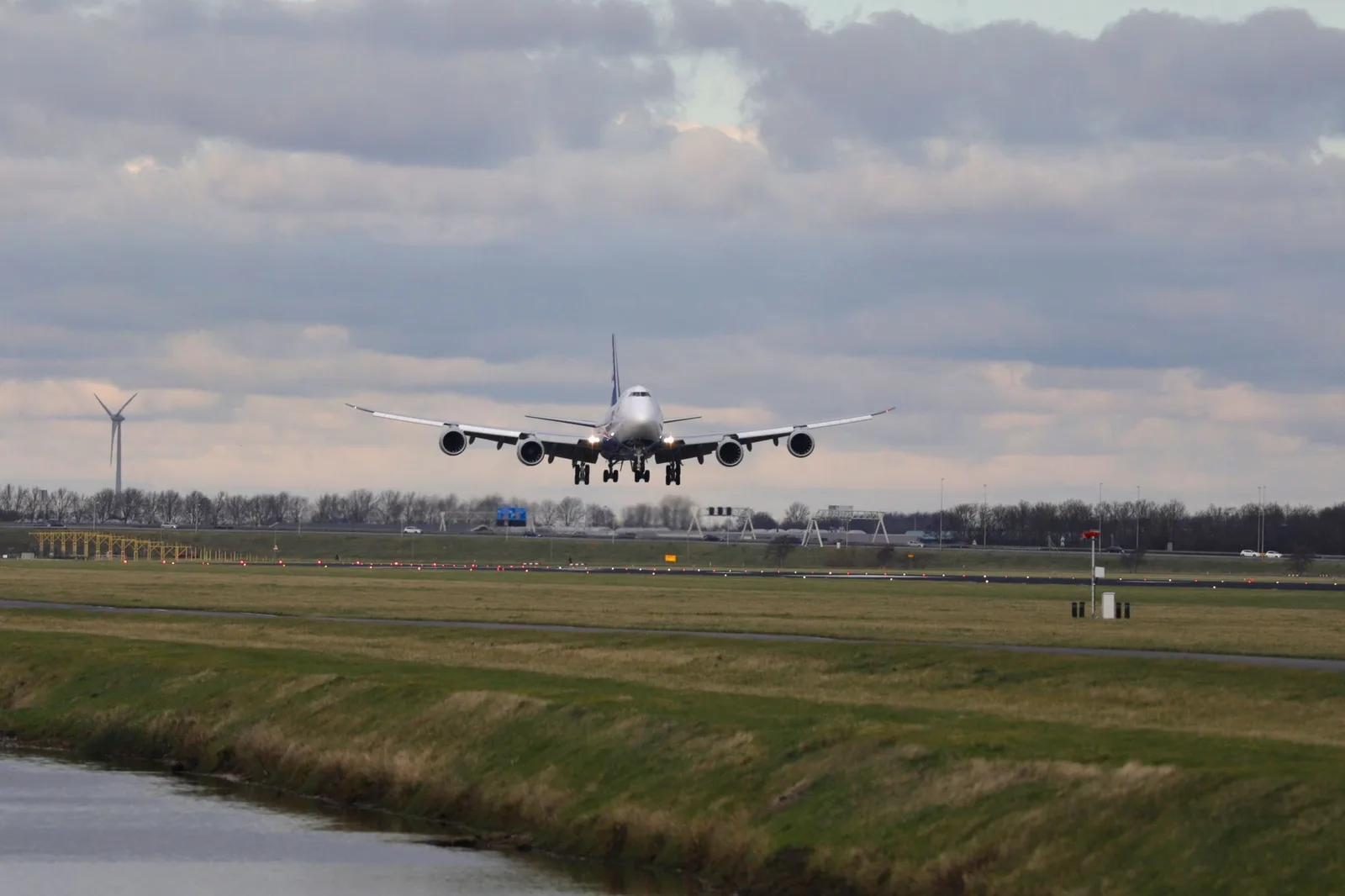
Fall and winter also bring stronger winds near the ground. On approach, that can mean a few more bumps below the clouds and the occasional crosswind landing, which I describe in why planes land sideways. It looks dramatic from the window and is routine for the crew.
Is fall and winter turbulence more dangerous?
No. Turbulence is a comfort issue and, at worst, an injury issue for people who are not seated and belted. It is not a structural issue. European (CS-25) and U.S. (Part 25) certification rules require an airliner to withstand 2.5 times its own weight pushing up, well beyond what turbulence produces in normal operations, as I detail in turbulence on a plane: categories and consequences.
What hurts people is a body that is not strapped in. The FAA counts 207 serious turbulence injuries at U.S. airlines between 2009 and 2024, and crew members account for most of them (166, against 40 passengers), because they are often standing during the service. Its advice is simple: keep your seat belt fastened at all times.
What do pilots do while the plane is bumping?
They slow the airplane down to the recommended turbulence speed, keep the autopilot flying as long as it does the job well, and warn the cabin. Nobody is fighting the airplane. The wings flex, the plane rides the air, and the crew's job is to keep the speed in the right range and the cabin safe.
In the cabin, the flight attendants stop the service, secure the carts and sit down with their own belts fastened. If you see them do it, it is the procedure working as written. It is not a sign that the situation is getting worse.
Can pilots see turbulence coming?
Partly, and that is why the seatbelt sign sometimes comes on for no visible reason. Before departure, the crew studies charts that show where the jet streams and turbulence are expected along the route. In flight, they hear from aircraft ahead and can ask air traffic control for another altitude. What they cannot do is see clear air on radar.
Help is coming: the FAA, with the research center NCAR, has developed a turbulence nowcast that gives pilots and dispatchers a forecast 15 minutes ahead, and a beta version is available to airlines. So when you hear "we expect some turbulence, please stay seated," it means the crew saw something coming and chose caution.
What does it feel like, and what can I do if it scares me?
In the cold season, expect short, sharp jolts and a side-to-side wobble that lasts seconds to a few minutes. It feels worse than it is because you cannot see it coming. The useful things are practical. Keep the belt snug across your hips, even when the sign is off. If you can choose, sit over the wing, near the plane's center of gravity, where movement is smallest. Breathe out longer than you breathe in, for example in for four seconds and out for six, and let your shoulders drop instead of gripping the armrest.
If the fear is bigger than the turbulence itself, you are far from alone, and it can be worked on. Our guide on how to overcome fear of flying explains where to start.
Frequently asked questions
Is turbulence worse in winter than in summer?
Clear-air turbulence at cruising altitude is generally worse in winter, when the jet streams are strongest. Thermal turbulence at low altitude is worse in summer. Which one you meet depends on the season, the route and the time of day.
Why does the seatbelt sign stay on when the sky looks clear?
Because clear-air turbulence is invisible. The crew keeps the sign on when the forecast or reports from other aircraft point to a risk. It is caution by design, not a sign of trouble.
Is a winter flight across the Atlantic always bumpy?
No. The jet stream is strongest there, so the odds of some turbulence are higher, but many crossings are smooth. The crew plans the route and altitude around the jet stream every time.
Should I check turbulence forecast apps before my flight?
If knowing helps you, fine, but those maps show the jet stream, not what you will feel in your seat. If checking makes your heart race, skip it. A flight can be bumpy for a few minutes and smooth for the rest.
Can turbulence make a plane fall?
No. Turbulence moves the plane up and down, sometimes abruptly, but it does not take away its ability to fly. The feeling of falling comes from moving air and your inner ear, not from the airplane dropping out of the sky.
Turbulence is one sensation among many that an anxious flyer has to live with. Understanding it is a first step. Living it calmly usually takes a bit more work.
If you want to measure where you stand, our free fear of flying assessment takes a few minutes. And if you would like to go further at your own pace, our online course, built by pilots and psychologists, walks you through each phase of the flight. We do not have a magic wand. We have a method, and the door is open.