Can Pilots Land in Fog? A Pilot Explains Low-Visibility Landings
Can Pilots Land in Fog? A Pilot Explains Low-Visibility Landings
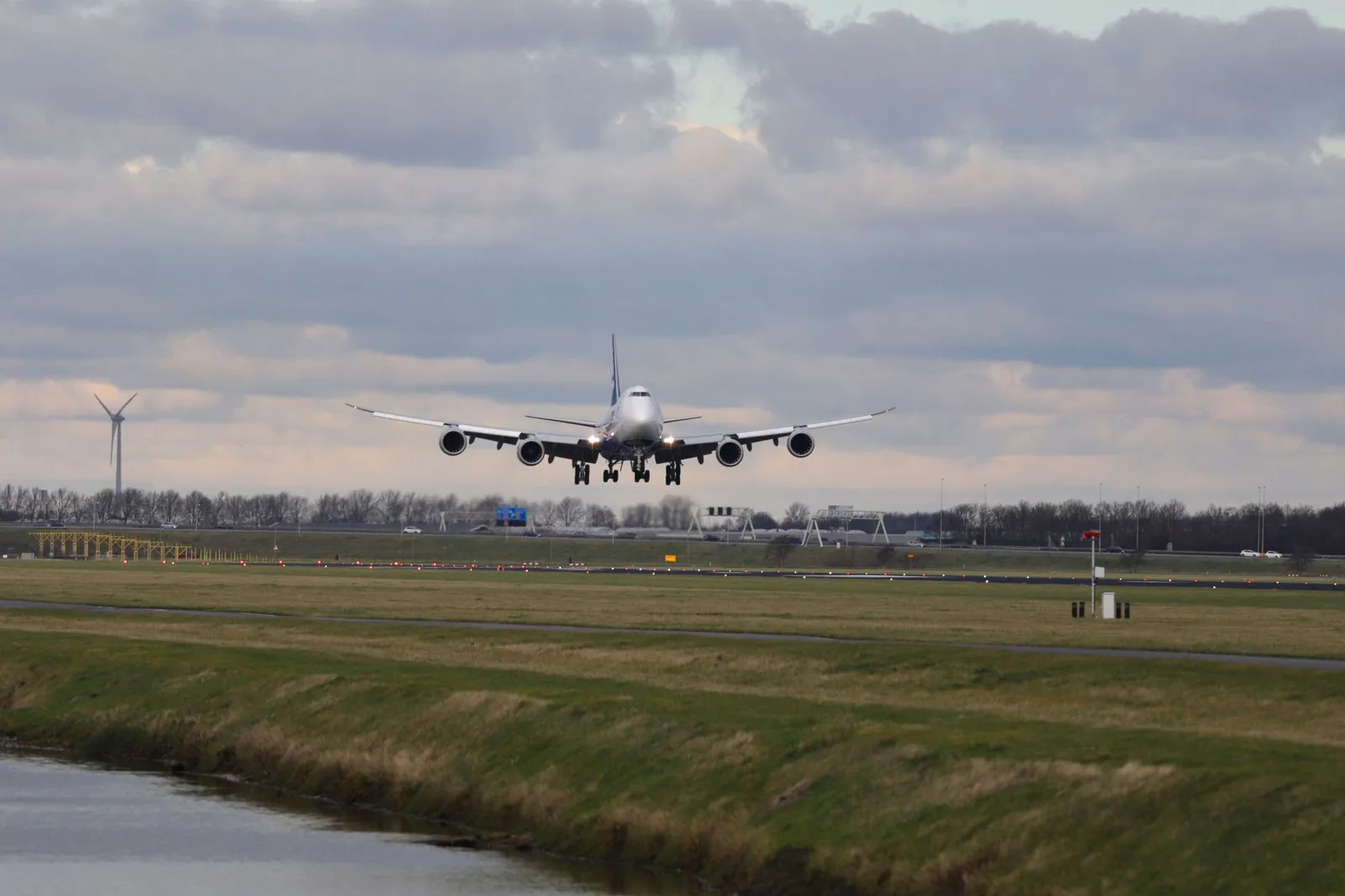
Yes, pilots land in fog, and they do it without needing to see the runway until the very last seconds, or sometimes not at all. Modern airliners follow two radio beams from the Instrument Landing System, and below a defined visibility the autopilot flies the approach and the touchdown while the crew monitors it. What changes in fog is not whether the landing is possible, it is how strict the rules become: minimum visibility figures, certified aircraft, certified crews, certified runways. And when the fog falls below those figures, nobody tries anyway. The aircraft holds, or it diverts to an airport that is open.
The short answer: fog does not stop a landing, it changes the rules
From the passenger cabin, fog looks like the worst possible weather. You see nothing out of the window, the ground never appears, and then the wheels touch. It feels like the pilots got lucky. They did not. A low-visibility approach is one of the most tightly regulated things we do, and the reason you saw nothing is that the approach was never built around your eyes or ours.
Here is the logic in one paragraph. An airliner on final approach is following two radio beams transmitted from the runway, one that tells it whether it is left or right of the centreline, one that tells it whether it is above or below the correct descent path. Those beams do not care about visibility. The only question is at what height the crew must have the runway lights in sight to continue. That height is called the decision height, and depending on the equipment fitted to the aircraft, the runway and the training of the crew, it goes from 200 feet down to zero.
What fog actually is, and why autumn is its season
Fog is not a special weather system. It is a cloud whose base is sitting on the ground. The Met Office defines fog as visibility reduced below 1,000 metres, and dense fog as visibility below 100 metres. The ingredients are simple: moisture in the air, light winds, and cooling until the air reaches the temperature at which that moisture condenses.
The most common type at airports is radiation fog. On a clear autumn night with barely any wind, the ground radiates its heat away to space, the layer of air just above it cools, and by the small hours it has cooled past the point where it can hold its water. That is why fog forms at dawn and usually burns off by mid morning once the sun starts heating the ground again. It is also why autumn and early winter are the fog seasons in northern Europe, exactly when the nights get long and the ground is still damp.
Forecasting it is genuinely hard. A degree of temperature or a knot of wind decides whether an airport wakes up clear or blanketed. This is why a fog delay often appears at the last minute rather than the day before, and it is worth knowing that this uncertainty is a forecasting limitation, not a sign that anything is going wrong.
How we land without seeing the runway: the ILS
The Instrument Landing System has been in service since the 1940s and it remains the backbone of every bad-weather arrival. Two transmitters sit beside the runway. The localiser gives lateral guidance, the exact extended centreline of the runway. The glideslope gives vertical guidance, normally a three degree descent path down to the touchdown zone. The aircraft receives both and displays them as two crossing needles, or feeds them straight to the autopilot.
That combination is what makes a precision approach precise. Without it, an approach is flown to a minimum altitude and the crew either sees the runway or goes around, with tolerances measured in hundreds of feet. With it, the aircraft is held on a path measured in metres, all the way to the threshold.
The ILS is also why fog costs an airport capacity rather than safety. The signal can be distorted by an aircraft or a vehicle sitting in the wrong place near the antennas, so when visibility drops, everything is kept clear of those protected areas. Fewer aircraft can move at once. That is the real source of fog delays.
CAT I, CAT II, CAT III: three levels, three sets of numbers
Low-visibility operations are graded into categories, and each category pairs a decision height with a minimum runway visual range, the RVR, which is measured by sensors along the runway itself rather than estimated by eye.
Category I is the standard: a decision height of 200 feet and an RVR of around 550 metres. At 200 feet above the ground, roughly fifteen seconds from touchdown, the crew must have the approach lights or the runway in sight. If not, we go around.
Category II lowers it to a decision height of 100 feet and an RVR of about 300 metres. Category III goes lower again, subdivided into IIIA, with an RVR in the region of 175 to 200 metres, and IIIB, which can be flown with an RVR as low as 75 metres and effectively no decision height at all. The exact figures vary slightly by regulator, aircraft and runway, but the ladder is always the same shape.
Three things have to be certified together for the lower categories: the runway, with its own dedicated lighting and a protected ILS installation; the aircraft, with redundant autopilots and instrumentation; and the crew, with a specific qualification. If any one of the three is missing, the flight is limited to the higher minima. This is not a judgement call made in the cockpit on the day.
Autoland: when the aircraft flies the landing
From Category IIIA downwards, the landing is normally flown by the autopilot, all the way through the flare and the touchdown. This is called an autoland, and it is not a fallback for a tired crew. It is the required procedure, because in that visibility no human being can pick up enough visual cues in time to judge the last hundred feet.
During an autoland the crew does not sit back. The workload is monitoring: confirming that the two or three autopilots are engaged and agreeing with each other, checking the annunciations at each stage, watching the RVR, and being ready to press the go-around levers instantly if any system flags a fault. Cathay Pacific describes the same division of labour on its own fleet: the aeroplane lands, the pilots supervise and are ready to take it away.
There is a detail that surprises people. Autoland touchdowns are often smoother than hand-flown ones, because the autopilot executes exactly the same flare every time while a human is judging it visually. If you have ever landed in fog and thought the landing felt unusually gentle, that is probably why.
Crews do not get this qualification once and keep it. Pilots have to demonstrate automatic landings in the simulator on a recurring basis, typically including one that goes normally and one where a failure forces a go-around, before the qualification is renewed for another year.
What changes on the ground: low visibility procedures
When the fog rolls in, the airport itself switches into Low Visibility Procedures. Thresholds vary, but they are commonly triggered when the RVR falls below roughly 550 to 800 metres or the cloud base drops below 200 to 300 feet.
Under LVP, vehicles and aircraft are held further back from the runway to protect the ILS signal, ground movement is guided with additional lighting and stop bars, and the airport deliberately reduces the number of movements it accepts per hour. Fewer arrivals per hour with the same number of aircraft inbound produces exactly what you experience: holding, longer taxi times, and cancellations that ripple through the rest of the day. The Met Office publishes a plain-language page on how fog affects travel that is worth reading if you are flying in November.
Notice what is being traded here. The airport gives up throughput. It does not give up margin.
Holding and diverting are the plan, not the failure
Every flight leaves with fuel for the destination, plus fuel to reach a named alternate airport, plus a reserve on top. When we file a flight plan into an airport with a fog forecast, the alternate is chosen precisely because the fog is not expected there.
So the sequence in bad visibility is boring by design. If the RVR is below our minima, we hold and wait, because fog often lifts within minutes as the sun works on it. If it does not lift and the fuel reaches the point where we must protect the diversion, we go to the alternate. Passengers experience this as a frustrating afternoon in the wrong city. In the cockpit it is the plan working as written.
A go-around belongs in the same category. If the runway lights are not in sight at the decision height, we add power and climb away. That is not an incident and it is not a near miss. It is the single most rehearsed manoeuvre in commercial aviation, and in fog it is a fully expected outcome, which is why we brief it on every single approach.
What you will actually notice from your seat
A longer approach, because aircraft are being spaced further apart. More time in a holding pattern, which is simply a racetrack shape flown at a constant altitude. A long, slow taxi with more stops than usual, because ground movements are restricted. And the odd sensation of the wheels touching before the ground has appeared through the window.
You may also hear the engines spool up and the aircraft climb away without landing. If that happens, you are not witnessing an emergency. You are watching the go-around we briefed twenty minutes earlier. If the noises themselves are part of what unsettles you, we have written a full guide to every airplane noise explained by a pilot.
One last piece of context for anyone convinced that this is the risky part of the trip. Landing is where the work is concentrated, but it is also the phase we train for most heavily, and we have looked at the actual numbers in is landing the most dangerous part of the flight. Fog also changes nothing about a habit you may have noticed in clear weather: aircraft still take off and land into the wind, for reasons we explain in why do planes take off and land into the wind.
Frequently asked questions
Can a plane land if the pilots cannot see the runway at all?
Yes, under Category IIIB conditions, with a certified aircraft, a certified runway and a qualified crew. The autopilot flies the approach and the touchdown using the ILS beams, and the crew monitors the systems. Below the published minima the approach is not attempted at all.
Is landing in fog more dangerous than landing in clear weather?
The procedure is more restrictive, which is the point. Fewer aircraft are allowed to move, the equipment requirements are higher, the crew qualification is specific, and the automation is doing the flying. What fog costs is capacity and punctuality, not safety margin.
Why was my flight delayed or cancelled if planes can land in fog?
Because low visibility procedures cut the number of movements an airport can handle per hour. The runway is still usable, but far fewer aircraft can use it in the same time, so the schedule backs up. Some airports and some aircraft are also only cleared to the higher minima.
What happens if the fog is too thick even for autoland?
The flight holds, waiting for the fog to lift, which in the case of radiation fog often happens quickly once the sun gets to work. If it does not lift before the fuel reaches the diversion point, the aircraft goes to its alternate airport, which was chosen before departure precisely for that reason.
Does the pilot do anything at all during an automatic landing?
Constantly. The crew monitors the autopilots for agreement, checks the callouts at each phase, watches the runway visual range, and is ready to initiate a go-around within a second if anything is not as briefed. Monitoring an automatic system correctly is a skill in itself, and it is trained and checked in the simulator.
If fog is the part that keeps you awake
Knowing how a Category III approach works helps, but information alone rarely dissolves a fear that has been building for years. If the anxiety starts days before departure, the flight itself is not really the problem, and we wrote about that specific pattern in the week before the flight.
You can start with our free fear of flying assessment, which takes a few minutes and tells you what is actually driving your fear. If you want to go further, our online fear of flying course is built by airline pilots and psychologists and you follow it at your own pace.
No pressure and no deadline. The door is open when you decide it is time.