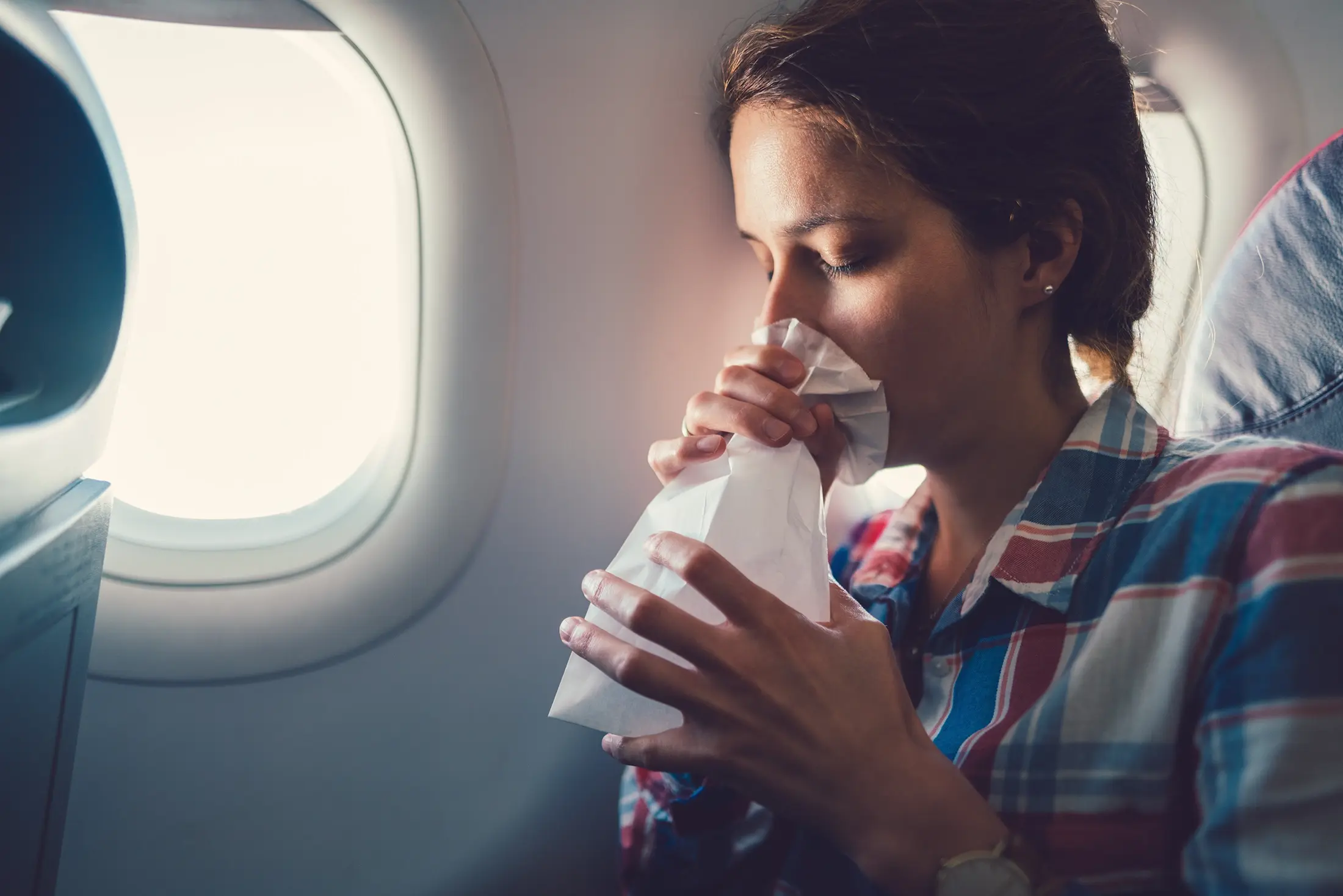
Medication for fear of flying: what it does and what it doesn't
Medication for fear of flying seems simple, but has real drawbacks. Learn what anxiolytics do, why they can backfire, and the alternatives for lasting relief.

Medication for fear of flying: what it does and what it doesn't
Medication can calm anxiety during one flight, but it does not treat fear of flying. The first-line treatment for a specific phobia is therapy that exposes you to the feared situation step by step, not a pill. Benzodiazepines, the drugs most often prescribed for flight anxiety, come with real downsides: drowsiness, lower alertness, and dependence when used repeatedly. Only a doctor can decide whether any medication makes sense for you. This article explains what each drug does, what it cannot do, and what treats the fear itself.
What medications do people take for fear of flying?
The NHS lists three groups of medicines used for phobias: antidepressants, beta blockers, and sedatives. For flying, people also reach for sedating antihistamines sold for motion sickness. None of them is a treatment for the fear itself.
Benzodiazepines
Alprazolam (Xanax), lorazepam (Ativan), diazepam (Valium) and clonazepam (Klonopin) are the benzodiazepines most often prescribed for situational anxiety. They act within about an hour and produce sedation, muscle relaxation, and less anxiety. The effect depends on the molecule and the dose, which is why this decision belongs to a physician.
Beta blockers
Propranolol and atenolol block the physical side of anxiety: racing heart, trembling, sweating. They do not sedate, but they leave anxious thoughts untouched. You can feel calmer in your body and still be convinced something is wrong with the plane.
Sedating antihistamines
Diphenhydramine (Benadryl) is sold over the counter in the United States and works mostly by making you drowsy. Hydroxyzine is a prescription antihistamine sometimes used for anxiety, with the same drowsiness. Many people feel groggy the next day. A scopolamine patch, prescribed for motion sickness, causes similar effects: sedation, dry mouth, blurred vision.
Antidepressants
SSRIs need weeks of daily use before they act, so they address ongoing anxiety, not a single flight. Whether one makes sense for a flying phobia is a medical decision, and it is not a quick fix for next week's trip.
Does medication cure fear of flying?
No. A pill can lower anxiety for a few hours, but the fear is still there when the effect wears off. Cognitive behavioral therapy (CBT) works the other way around: you face the feared situation in steps and learn from experience that it is safe. In a study cited by the American Psychological Association, roughly three-fourths of patients completed their first post-treatment flight, and nearly as many were still flying a year later.
If a sedative mutes the experience, the brain may file the flight as "I got through because of the pill" rather than "flying is safe". That is the standard CBT rationale, not the result of a flying-specific trial, so read it as clinical reasoning rather than proof. The same APA article quotes psychologists who make a related point: struggling against anxiety tends to increase it, and relying on alcohol or medication to get through a flight can get in the way of learning to manage it. The goal is to tolerate anxiety, not to eliminate it.
Sometimes the fear simply moves. You stop fearing the flight and start fearing the flight without the pill. If that sounds familiar, the pill has become the problem to solve, and a structured program can help you work on that too.
What are the risks of benzodiazepines on a flight?
The main risks are sedation, slower reactions, memory gaps, and dependence. The FDA requires an updated boxed warning, its strongest, on every benzodiazepine for the risks of abuse, addiction, physical dependence, and withdrawal reactions. It notes that physical dependence can occur after several days to weeks of steady use, even as prescribed.
On board, drowsiness and reduced alertness are the practical issues. Partial memory loss of the flight is possible, which also means you miss the chance to see that it went fine. Never mix a benzodiazepine with alcohol: the sedative effects add up, and alcohol is freely offered on a plane. When the drug wears off, anxiety can come back stronger, and on a long flight that can happen mid-air.
Rules for carrying these drugs differ by country. Bring your prescription and check the destination's regulations before you leave. Pregnancy, breastfeeding, breathing problems, sleep apnea and older age all change the risk calculation, so tell your doctor about them.
When might a doctor still prescribe something?
In a few specific situations, and only on a doctor's decision: a fear so intense that it blocks any therapy, a flight you cannot avoid, or a short-term bridge while therapy begins. In those cases a doctor weighs the benefits against the risks above and may plan to taper off as confidence builds.
We do not give prescribing advice, and an article cannot. If you already take a daily anxiolytic, ask your prescriber before you fly. Never take someone else's prescription.
What do health authorities recommend for fear of flying?
They point to therapy first. The APA article describes treatment that pairs exposure with cognitive and behavioral skills, with virtual reality exposure as an alternative when real flights are not practical. The NHS lists talking therapies such as CBT and hypnotherapy among the treatments for phobias, and in England you can refer yourself to an NHS talking therapies service without going through a GP.
For benzodiazepines, the message is caution. The FDA warning above applies to the whole class. The conclusion is not that medication is forbidden, but that it is an imperfect tool for a fear that therapy can resolve.
What can you do instead of taking a pill?
Start with the approach that treats the fear: gradual exposure combined with an understanding of how a plane works. Our guide to overcoming fear of flying lays out the steps.
Some people add tools that act on the body's stress response. Slow breathing practices are covered in heart coherence and sophrology. For deeper anchored fears, hypnosis is another route some people choose. Homeopathy and Bach flowers are also used as comfort rituals, but their effect has not been shown in rigorous controlled trials, so they are an add-on at most.
FAQ: medication and fear of flying
Can I take my usual prescription anxiolytic for a flight?
If a doctor prescribed it for regular use, ask that doctor before you fly, because dose and timing may need adjusting. Never take someone else's prescription.
Are there over-the-counter options?
In the United States, diphenhydramine is sold over the counter and mostly makes you drowsy. Melatonin can help with sleep on overnight flights. None of them treats the fear, and you should ask a pharmacist before combining them with other medicines.
Does a pill taken the night before the flight work?
It depends on the molecule, and only a doctor can say. Short-acting drugs wear off, and long-acting ones can leave you groggy. This is why self-medicating the evening before is a poor plan.
Can I have a drink with an anxiolytic on a plane?
No. Alcohol and benzodiazepines add up their sedative effects, and the dry cabin air makes the effect of alcohol stronger. Skip the drink.
Is there a medication that cures fear of flying?
No. What lasts is therapy that exposes you to flying step by step. Medication can sometimes support that process, but it does not replace it.
Build confidence without relying on a pill
We have no magic wand, and we will not promise a result. If you want to see where your fear stands, the free questionnaire takes a few minutes. And if you want to work on it step by step, the online program was designed by pilots and psychologists to help you fly without needing a pill.