Should You Tell the Flight Crew You Are Afraid of Flying?
Should You Tell the Flight Crew You Are Afraid of Flying?
Yes, tell them. Saying "I am nervous about flying" to a flight attendant is ordinary, it takes ten seconds at the door, and it lets the crew check on you at the right moments. They cannot guess it: an anxious passenger sitting quietly looks like any other passenger. What they can do is limited but real. Here is what to say, when to say it, and what not to expect.
Should I tell the flight attendants that I am afraid of flying?
Yes. Cabin crew cannot see fear, and a passenger who grips the armrest in silence looks, from the aisle, like a passenger who is fine.
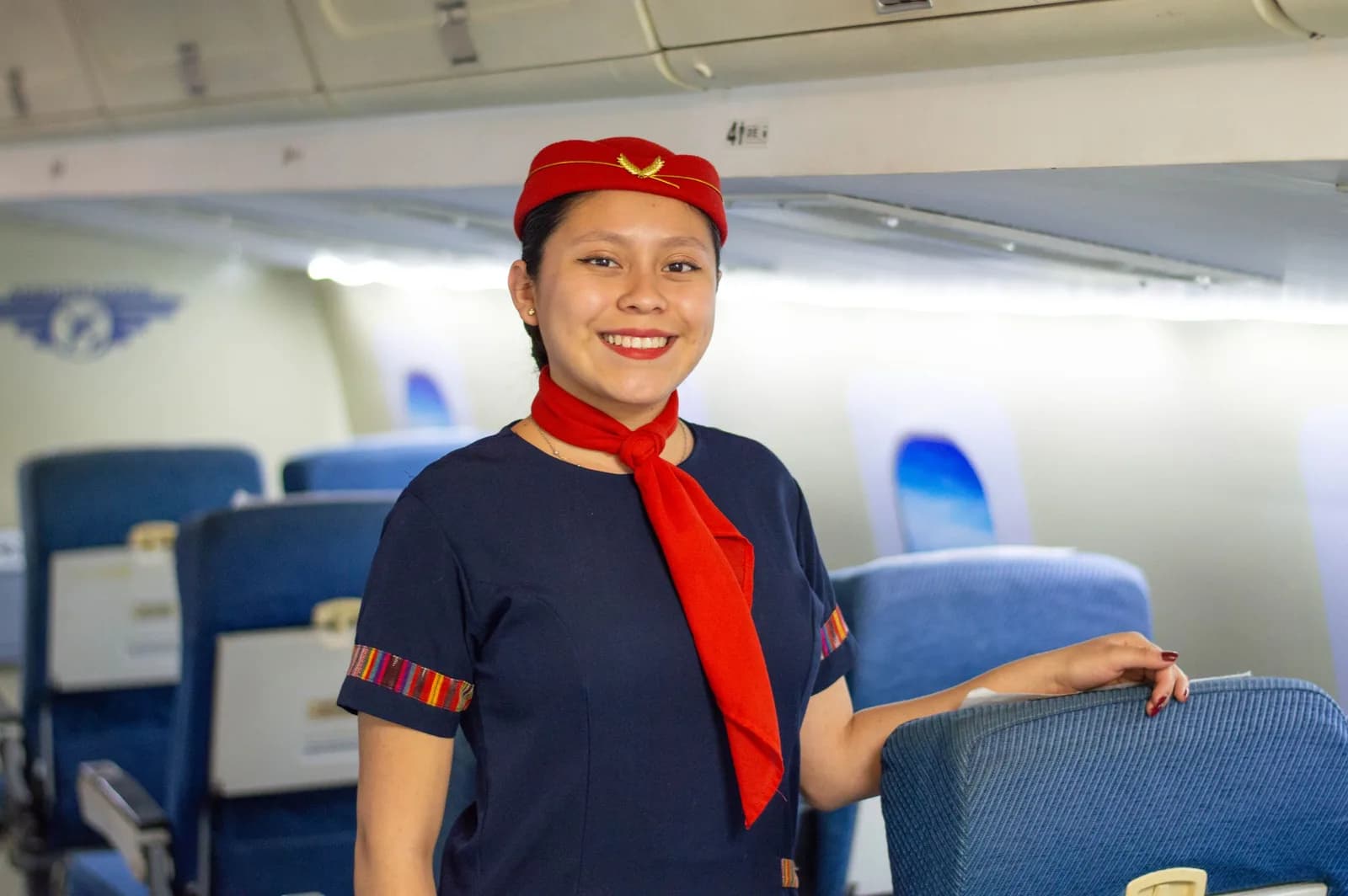
Their first job is safety. Looking after passengers who are struggling is also part of the work on every flight, and a nervous flyer is a situation they meet regularly. Telling them is not a confession and not a complaint. It is information, in the same way as mentioning an allergy.
You are also far from alone. According to the World Health Organization, about 470 million people worldwide were living with an anxiety disorder in 2023. Fear of flying belongs to this very large family, and it is nothing to be ashamed of.
What can the crew actually do once they know?
They can check on you, explain what is happening, and give you a person to turn to. That is the realistic list, and it is more useful than it sounds.
Depending on the airline and the flight, that can mean a short check-in after takeoff, a word of explanation when you hear a noise that worries you, a glass of water, and a quiet signal to look for if you start to struggle. When the cabin has empty seats, some crews will also move you to a spot where you feel better. Knowing that someone is watching out for you removes part of the load, because you no longer have to manage the whole flight alone.
The explanations matter more than people expect. Most sounds that alarm anxious passengers (the thump after takeoff, the change in engine noise, the whine before landing) are normal. We list them in every airplane noise explained by a pilot.
When and how should I say it?
Say it at the door when you board, or at your seat before takeoff, and keep it to one sentence. Once the doors are closed the crew is busy with the safety demonstration and checks, and the window for a calm conversation gets shorter.
A sentence that works: "Hi, I am nervous about flying. Could you check on me once we are in the air?" You do not need to justify it or give your history. If saying it out loud feels like too much, type it on your phone and show the screen. The crew will understand just as well.
If you only decide after takeoff, it is still fine. Ask the first flight attendant who passes, or use the call button if you need someone. Keep the call button for the moments when you really need it, and do not wait until panic is at its peak.
What should I ask for, and what should I not expect?
Ask for a check-in, for explanations, and for a bit of patience. Do not expect a companion for the whole flight.
Reasonable requests: a quick visit after takeoff, a heads-up if the captain has warned the cabin about a bumpy stretch, water, and a short explanation of anything you hear. You can also ask where to sit when you book. A seat over the wing, close to the aircraft's center of gravity, moves less than a seat at the back.
What the crew will not do: sit with you for hours, give you medication, or skip a procedure. When the seat belt sign is on, they will also sit down and fasten their own belts during turbulence. That is the standard procedure, not a sign that something is wrong. Many passengers read it as alarm, and it is the opposite.
On medication, be careful. The WHO notes that benzodiazepines are generally not recommended for anxiety disorders because of their potential for dependence and limited long-term benefit. A pill taken at the last minute is not a plan. We explain this in our article on medications and fear of flying.
Do the pilots need to know too?
Not necessarily. The cockpit door stays closed during the flight, and the cabin crew run the cabin. If you tell the lead flight attendant, the information can reach the captain when it is useful, depending on the airline.
A captain who knows there is an anxious passenger on board can add a sentence to the announcement about what to expect, for example when the flight will be bumpy or when the engine noise will change. That sentence is often worth more than ten minutes of reassurance after the fact.
What if I feel embarrassed or afraid of being judged?
You are not the first anxious passenger this crew has met this month, and the reaction you will get is usually practical, not judgmental. Fear of flying is common and documented. It is not a character flaw.
Keep the tone neutral and factual. "I am a nervous flyer, could you check on me?" is a request, not a confession. If you still cannot say it, the note on your phone does the job.
Is telling the crew enough to get through the flight?
It helps, and it does not treat the fear. The crew supports you during the flight. It cannot change what happens in your body before and during it.
What does change it is therapy. The NHS lists talking therapies, in particular cognitive behavioral therapy (CBT), as the main treatment for phobias. The National Institute of Mental Health describes psychotherapy such as CBT as an effective treatment for anxiety disorders. The WHO says only 27.6% of people who need treatment for anxiety actually receive it.
If your fear keeps you from flying, or ruins the days before, start with our guide to overcoming fear of flying. And if panic is already rising mid-flight, read how to handle a panic attack on a plane.
Frequently asked questions
Will the flight attendants think I am being dramatic?
No. Crews meet nervous passengers regularly, and a calm, one-sentence request reads as responsible, not dramatic. The passengers who worry crews are the ones who say nothing and panic quietly.
Can a flight attendant give me medication or sit with me?
No. Their job is safety and service for the whole cabin, so they cannot stay with one person for the flight or give you medication. They can check on you, explain what is happening and come when you call.
What if I only realize I need help after takeoff?
Ask the first flight attendant who passes, or use the call button if you need someone. It is never too late to say it. The sooner you do, the easier it is for them to help.
Will the pilot be told that I am afraid?
Possibly, if it is useful. Tell the lead flight attendant and, depending on the airline, the information can reach the captain. You do not need to go to the cockpit, and the door stays closed in flight.
Do I have to tell the crew if I am only a little nervous?
No. It is optional. If a bit of tension is manageable with breathing and distraction, you can skip it. Say it when you think it would help to have someone aware.
What if the fear is bigger than one flight?
Telling the crew gets you through a flight. It does not change why you are afraid. If you want to understand what is driving your fear, you can start with our free fear of flying assessment. It takes a few minutes and gives you a clear picture.
If you want to go further, our online fear of flying course was built by airline pilots and psychologists. We have no magic wand, and we do not promise results. We give you tools, facts and a method.
No pressure and no deadline. The door is open whenever you decide it is time.