Will My Fear of Flying Ever Go Away?
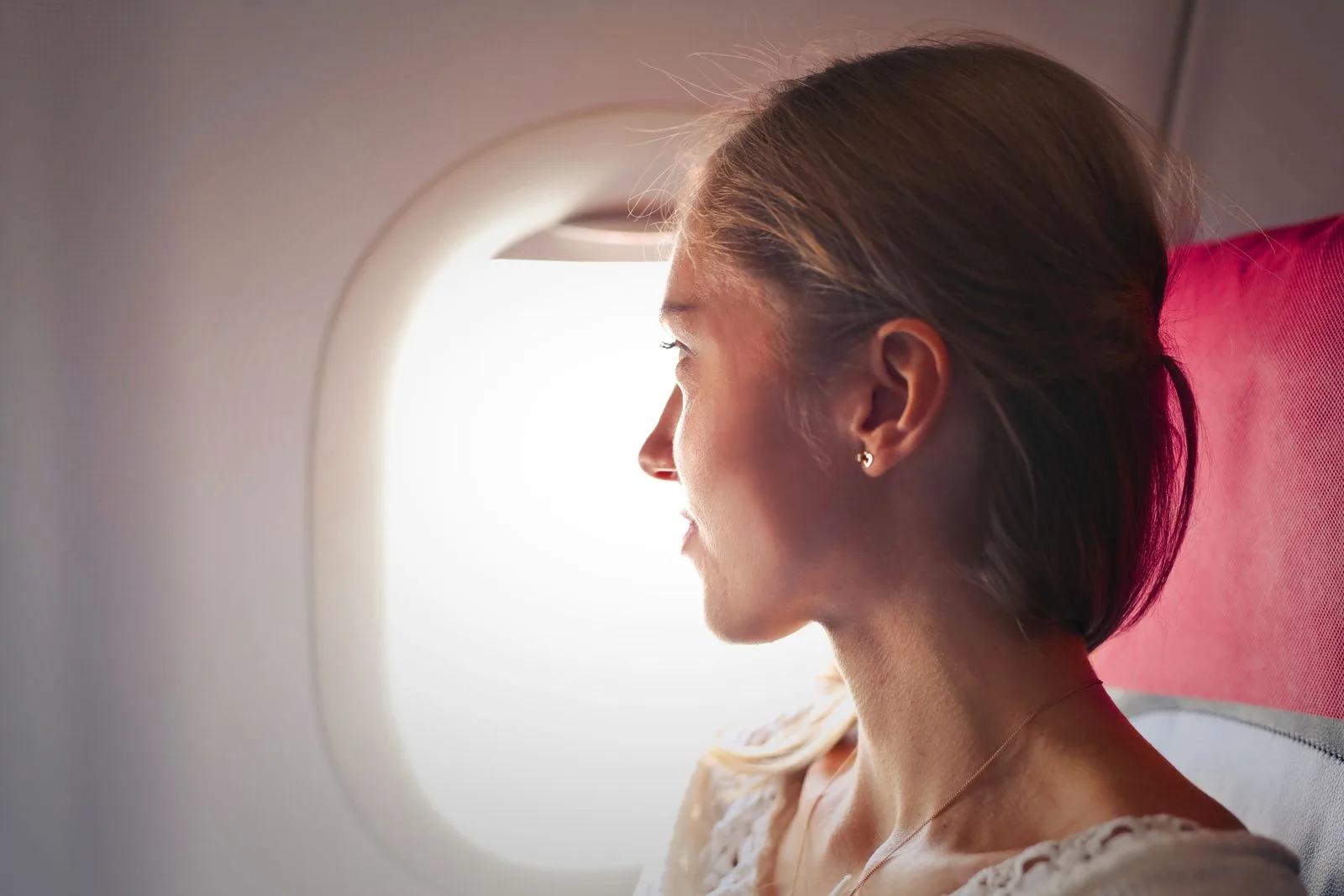
Will My Fear of Flying Ever Go Away?
For most people, yes: fear of flying can shrink to the point where it no longer decides where you go or how you travel. It rarely fades on its own, though, because avoiding flights keeps it alive. What usually remains is a little apprehension, which is normal and manageable. And if the fear comes back after a long break or a rough flight, you are not starting from zero.
Can fear of flying really go away?
It can fade a lot, and for many people it stops being a problem. Fear of flying is a specific phobia, and specific phobias are among the anxiety problems that respond best to treatment. According to MSD Manuals, exposure therapy helps most people who stick with it, and it is often the only treatment a specific phobia needs.
What "going away" means deserves a closer look. The goal is not to feel nothing at all at takeoff. Plenty of people who fly without fear still notice a bump or an unfamiliar noise. The goal is that the fear no longer gets the final say: you book the trip, you board, and you step off the plane with an ordinary memory of the flight instead of an ordeal.
Why doesn't the fear fade on its own?
Because avoidance feeds it. Each time you cancel a trip, drive instead, or turn down an invitation abroad, you feel relief. Your brain records that relief as proof that the danger was real. Next time, the fear starts earlier and pushes harder.
Flying with gritted teeth does not always fix it either. If you spend the whole flight braced, counting the minutes, convinced you only made it because you stayed on guard, your brain learns the wrong lesson: "I survived thanks to my vigilance." What changes the fear is understanding what you feel and staying in the situation long enough for the alarm to come down by itself.
There is also a gap between the fear and the facts. The EASA describes the airplane as one of the safest forms of transportation ever created. Knowing that is useful, but a statistic does not calm a nervous system on its own. The fear lives in the body, and that is where the work happens.
What does getting better actually look like?
It shows up first in the days before the flight, not in the air. In our experience, people usually notice the change in this order. The dread starts later, a few days before departure instead of several weeks. The night before is less sleepless. In flight, the body still reacts, but the reaction peaks lower and settles faster. And noises and bumps get an explanation in your head before they get a reaction in your stomach.
Another sign: you stop organizing your life around flights. You say yes to a wedding abroad, a work trip, a holiday that used to be off the table. That is the real yardstick, more than your heart rate at takeoff.
How long does it take to get over a fear of flying?
It depends on your history, but in our experience it is counted in weeks of structured work, not years. A fear that has been there for twenty years is not necessarily harder to treat than one that appeared last year. What weighs more is how much you have been avoiding, and whether you work on it with a method or with scattered tips.
We have no magic wand and no fixed timeline to promise. Some people feel a clear difference after a first structured step, others need several flights to consolidate. Progress is rarely a straight line: a calm flight can be followed by a tenser one without meaning that anything has failed.
Which approaches work best?
The approaches with the strongest evidence combine understanding and gradual exposure, which is what cognitive behavioral therapy (CBT) does. According to the World Health Organization, highly effective treatments exist for anxiety disorders, yet only about 1 in 4 people who need them receive any treatment. Fear of flying is often lived as a personal quirk rather than something treatable, which partly explains that gap.
For fear of flying, understanding plays a special role. A pilot who explains why the wings flex, what a noise means, or why turbulence does not threaten the aircraft removes much of the uncertainty that the brain fills with worst-case scenarios. The psychological work then teaches you to recognize the anxiety, let it rise and fall, and stop fighting it. Exposure comes in steps: images, virtual reality, the airport, then a real flight.
Medication is a separate case. It can help a person get on board, but it does not teach the brain anything new. MSD Manuals notes that a benzodiazepine alone does not generally eliminate the phobia, even though it allows the person to fly. Our article on medication and fear of flying explains why, and why that decision belongs to a doctor.
Can fear of flying come back after it has gone?
Yes, it can, and it is common. A long period without flying, a particularly bumpy flight, a stressful time in your life or a news story can wake the fear up. Psychologists call this a return of fear. It does not mean the work was useless.
The difference is that you now have tools and a reference point. In our experience, a fear that returns after this kind of work is usually less intense and easier to bring back down than the original one. The best protection is simple: keep flying, even short trips, and go back to what worked (the explanations, the breathing, the way you talk to yourself) a few days before the next flight rather than at the gate.
Is it ever too late to deal with a fear of flying?
No. Fear of flying can appear at 20, at 45 or at 60, often after a life change such as becoming a parent, a period of stress or a difficult flight. It can also be worked on at any age. Many of the people we meet have not flown in ten or fifteen years. Their first step is rarely a flight: it is understanding what is happening to them.
If that is your situation, our article on your first flight with a fear of flying describes how to prepare that return step by step.
What can you do starting today?
Start by measuring where you are, then replace avoidance with small, planned steps. Waiting to feel ready is the trap: readiness comes from doing, not the other way around.
In practice, that means assessing how intense your fear is and what triggers it, learning how an airplane works from people who fly them, choosing one structured method rather than tips picked up here and there, and putting a real flight on the calendar, even a short one, so that the work leads somewhere. Our page on how to overcome a fear of flying brings together the approaches that hold up.
Frequently asked questions
Can fear of flying be cured permanently?
For many people the fear drops to a level that no longer limits them, and stays there as long as they keep flying. A little apprehension may remain, which is normal. Going back to avoidance is what most often brings the fear back.
Why did my fear of flying come back after years of flying fine?
A life change, a stressful period or a rough flight can be enough to wake it up. It is common and it is not a sign of weakness. The fear can be worked on at that point just as well as the first time.
Does fear of flying get worse with age?
Not automatically. It often appears or grows after life changes, and years of avoidance make it heavier. Age itself is not an obstacle to treating it.
Will I ever actually enjoy flying?
Some people end up enjoying it, others simply find it neutral, like a train ride. Both count. The aim is to fly without the fear deciding for you.
Can I get over it without medication?
Yes. The approaches with the strongest evidence for specific phobias are psychological, based on understanding and gradual exposure. Medication can be discussed with a doctor, but on its own it does not treat the fear.
Where to go from here
If you want to know where you stand, our free fear of flying assessment takes a few minutes.
If you want to work on it at your own pace, our online course, designed by pilots and psychologists, takes you through every phase of a flight. We have no magic wand and we do not promise results. We give you tools, facts and a method.
No pressure and no deadline. The door is open whenever you decide the time is right.