Your First Flight With Fear of Flying: A Pilot's Survival Guide
Your First Flight With Fear of Flying: A Pilot's Survival Guide
Taking your first flight when you are scared of flying is far more common than you think, and it is very manageable. The takeoff push, the engine sounds and the small bumps you will feel are all normal, expected parts of a routine flight. As a pilot, my job here is to tell you what is actually happening behind each sensation, so your brain stops reading a routine event as a threat. With a little preparation, a few breathing tools and the right seat, most first time anxious flyers land calmer than they boarded.
Why your first flight feels so intense
A first flight is not only new, it is a flood of unfamiliar signals arriving all at once. You have never felt the seat push into your back on takeoff, never heard the landing gear fold up, never sensed the floor tilt as the aircraft banks. Your nervous system is doing exactly what evolution designed it to do: when it cannot label a sensation, it treats it as a possible danger and floods you with adrenaline. That is why your heart races before anything has even happened.
The good news is simple. Fear feeds on the unknown, and almost everything you will feel on that first flight has a boring, mechanical explanation. Once you can name a sensation, it loses most of its power. Roughly one passenger in five is an anxious flyer, so if you feel this way you are in very ordinary company. National Geographic collected practical advice from psychologists on exactly this point, and the recurring theme is the same one pilots use: information calms the brain. You can read their overview of evidence based tips for fear of flying.
What actually happens, from takeoff to landing
Let me walk you through the flight the way I would if you were sitting in my jump seat. On the takeoff roll, the engines spool up to a high, steady thrust and the aircraft accelerates hard down the runway. That firm push into your seat is normal and, honestly, a sign that everything is working. Within seconds the nose lifts and you climb steeply on purpose, because a strong initial climb is the safest, most efficient way to gain altitude.
A minute or two after takeoff you may feel the engines seem to ease off and the nose lower slightly. Many first timers read this as the plane losing power or dropping. It is neither. We are simply reducing thrust to a normal climb setting once we are safely away from the ground, a routine, planned adjustment. You will also hear a clunk under the floor shortly after liftoff: that is the landing gear retracting, exactly as designed.
In cruise you sit at around 35,000 feet, above most weather. Here you will meet turbulence, and it is the single sensation that scares new flyers the most. Turbulence is moving air, nothing more. A modern airliner is built and tested to handle loads far beyond anything you will ever feel in the cabin, and the wings are designed to flex precisely so they can absorb it. Bumps are uncomfortable, not dangerous. When we know rough air is ahead, we turn on the seatbelt sign and often change altitude to find smoother air.
On descent and landing you will hear more noises: engines changing pitch, a whirring as the flaps extend to let us fly slowly, and the gear coming down again. The firm contact on the runway followed by a loud roar is the brakes and reverse thrust doing their job to slow the aircraft. None of it is an emergency. It is a well rehearsed sequence that we fly, quite literally, thousands of times.
The days before: preparation that lowers the fear
Your first flight is won or lost in the days before it, not at the gate. Start by removing every avoidable stressor. Pack the night before, check in online, and screenshot your boarding pass and gate. The more small decisions you settle in advance, the fewer your anxious brain has to fight through on the day. Cut caffeine the day before and on the morning of the flight, because it mimics and amplifies the exact physical symptoms of anxiety, a racing heart and a tight chest.
Sleep matters more than people admit. Flying exhausted makes your emotional brake pedal weaker, so protect your rest the night before. It also helps to rehearse the flight in your mind while calm: picture the takeoff push, the climb, a few bumps, and yourself breathing through them. This is not wishful thinking, it is exposure, and it takes the surprise out of the real thing. If you want a compact starting checklist, our guide to the 5 tips to stop being afraid of flying covers the essentials in a few minutes.
It is also worth grounding yourself in the actual numbers, because your fear is not lying about the stakes, it is lying about the odds. According to the 2025 IATA safety report, flying remains the safest form of long distance travel, with one accident for roughly every 880,000 flights. On average a passenger would have to fly every single day for tens of thousands of years to be involved in a fatal accident. If you want the pilot's version of why, read why the airplane is the safest mode of transportation.
At the airport and boarding
Arrive early. Rushing through security with a pounding heart primes your body for panic before you even reach the gate. Give yourself margin so the airport feels like a slow walk, not a sprint. When you board, tell a flight attendant quietly that this is your first flight and you are a nervous flyer. This is not embarrassing, crews hear it constantly, and they are trained to help. They can explain a noise, check on you during the flight, and simply knowing someone knows makes the cabin feel less isolating.
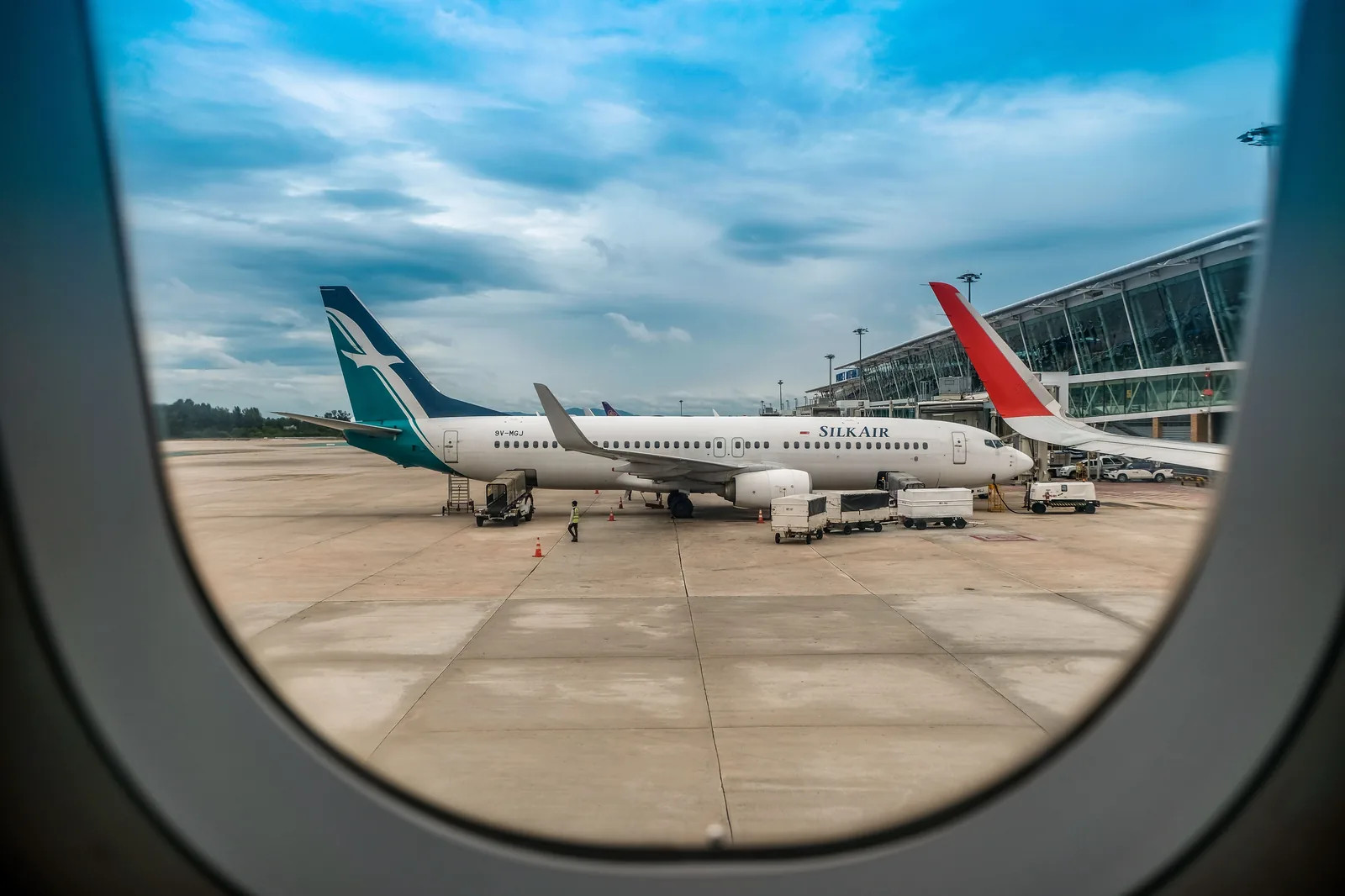
Choose your seat with intention. A seat over the wing sits closest to the aircraft's center of gravity and feels the most stable in turbulence. If open windows make you more anxious, an aisle seat gives you a sense of space and easy movement. If, on the contrary, seeing the horizon reassures you, take the window: watching the wing stay rock steady against the sky is oddly calming for a lot of first timers.
During the flight: tools that actually work
The core skill is breathing, because you cannot be relaxed and hyperventilating at the same time. Use a long exhale technique: breathe in for four seconds, then out slowly for six to eight. The extended out breath is what physically switches your body from alarm mode toward calm. Health specialists recommend exactly this kind of controlled breathing for flight anxiety, and Texas Health has a clear, practical rundown for nervous flyers dealing with flight anxiety.
Pair breathing with distraction that demands attention. Passive scrolling is not enough, your fear will win the background. Download a gripping series, an audiobook or a playlist before you leave, and set it up before takeoff so you are not fumbling when the engines spool up. Keep water within reach and sip regularly, because dehydration worsens the light headed, jittery feeling that anxiety already produces. Skip alcohol: it feels like it helps for twenty minutes, then leaves you more anxious and dehydrated.
When panic rises: the three minute reset
If the fear spikes into something bigger, you are not in danger and it will pass, that is the one thing to hold on to. A panic wave typically peaks within a few minutes and then fades on its own. Anchor yourself in the present with a simple grounding drill: name five things you can see, four you can touch, three you can hear. It pulls your mind out of the catastrophe loop and back into the actual, safe cabin around you.
Keep breathing long and slow, unclench your hands and jaw, and remind yourself that thousands of aircraft are in the sky at this exact moment, all doing the same routine thing yours is doing. If you want a full playbook for the worst case, we wrote a dedicated guide on how to handle a panic attack mid flight, including what to say to the crew.
After you land: turning one flight into confidence
Here is the part no one tells first timers: the first flight is the hardest one you will ever take, and it gets easier from there. Fear shrinks with exposure. Each flight teaches your nervous system that the push, the bumps and the noises led to a safe landing, and that lesson compounds. Many people who dreaded their first flight are, a handful of trips later, reading a book through moderate turbulence without a second thought.
So when you land, take a moment to notice what you just did. You felt afraid and you flew anyway. That is not the absence of fear, it is courage, and it is exactly how confidence is built. If your fear runs deeper than first flight nerves, that is worth addressing directly rather than white knuckling every trip, and structured help works.
Frequently asked questions
Is it normal to feel the plane drop after takeoff?
Yes. What feels like a drop is usually the normal reduction of engine thrust to a standard climb setting once the aircraft is safely airborne. The plane is not falling, it is transitioning to routine climb, a planned change we make on every flight.
What is the safest seat for a nervous first time flyer?
A seat over the wing, near the aircraft's center of gravity, feels the most stable in turbulence. Beyond that, choose an aisle seat if enclosed spaces bother you, or a window if seeing the horizon and the steady wing reassures you.
Should I tell the crew it is my first flight?
Absolutely. Flight attendants hear this every day and are trained to help. Telling them lets someone keep an eye on you, explain unfamiliar noises, and makes the whole cabin feel less isolating. There is nothing embarrassing about it.
Will turbulence on my first flight be dangerous?
No. Turbulence is uncomfortable, not dangerous. Airliners are built and tested to handle far greater forces than you will ever feel in the cabin, and the wings flex on purpose to absorb rough air. The seatbelt sign is a comfort and safety precaution, not an alarm.
What can I do the moment I feel panic starting?
Breathe in for four seconds and out for six to eight, then ground yourself: name five things you see, four you can touch, three you hear. Panic peaks within a few minutes and fades. Loosen your hands and jaw and let the wave pass.
Ready to make that first flight easier?
You do not have to face it alone or unprepared. A good first step is to understand where your own fear comes from and how strong it is. You can take our free fear of flying questionnaire in a few minutes and get a clear picture of your profile.
If you would like to go further before you fly, our online fear of flying course is built by pilots and psychologists to walk you, at your own pace, from dread to a calm, informed first takeoff. The door is open whenever you are ready.