What Happens if an Engine Fails in Flight? A Pilot Explains
What Happens if an Engine Fails in Flight? A Pilot Explains
If an engine fails in flight, the aircraft keeps flying, and it keeps flying normally. Every twin engine airliner is certified to take off, climb, cruise and land on a single engine, because regulators refuse to certify one that cannot. Engine failures are also extremely rare: the worldwide long haul fleet averages roughly one in flight shutdown per 100,000 engine hours, and some engine families do far better than that. What follows is what actually happens in the cockpit and in the cabin, told by a pilot, without softening anything and without dramatizing it either.
Yes, an airliner flies on one engine. That is the design, not the miracle.
The first thing to understand is that a second engine is not a spare wheel you hope never to use. It is a certification requirement. Before an airliner is allowed to carry a single paying passenger, the manufacturer has to demonstrate to the FAA and to EASA that the aircraft can lose an engine at the worst possible moment, on the runway at high speed, and still climb away safely and return for a landing. If it cannot do that, it does not get certified.
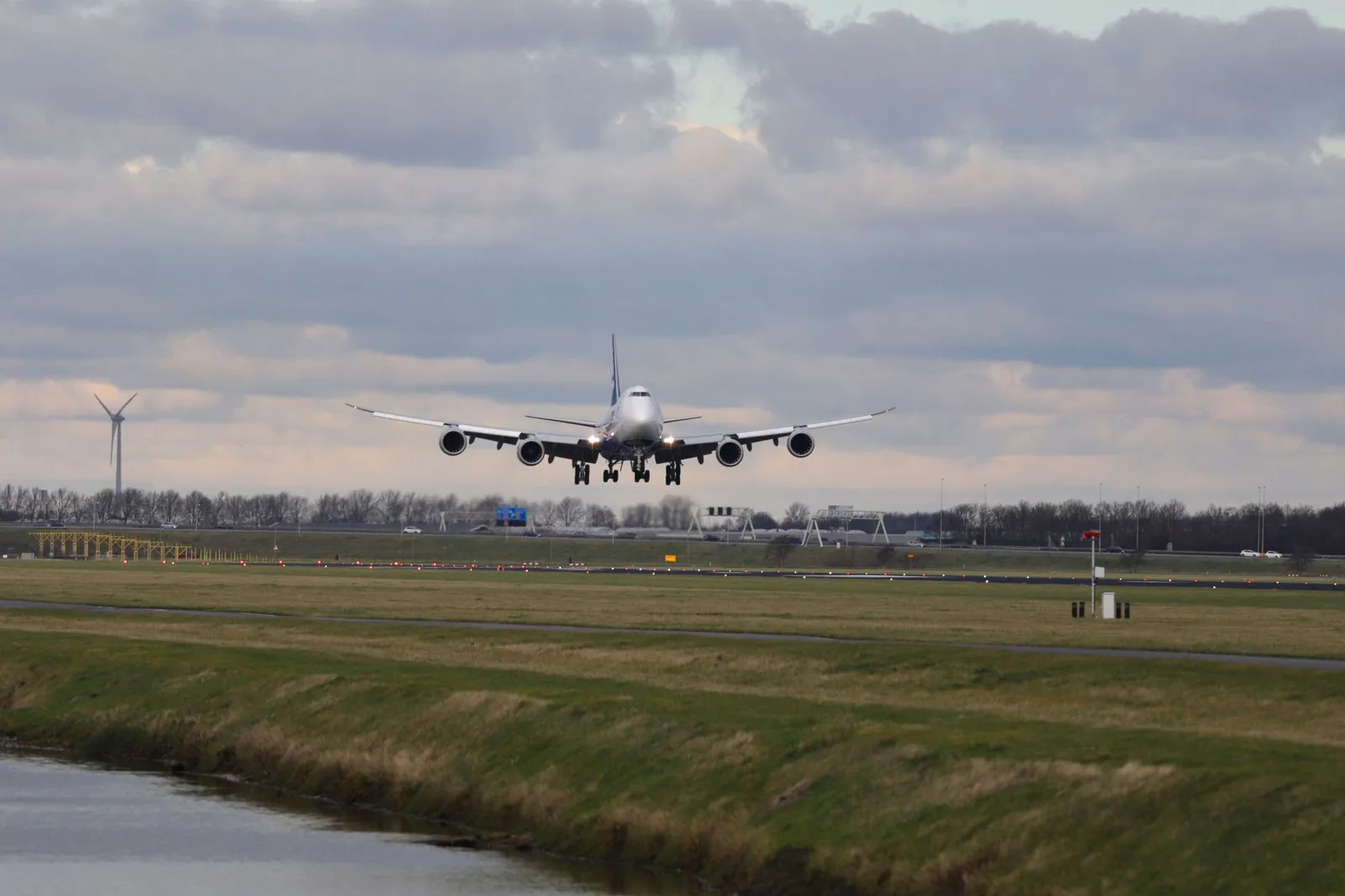
This is why pilots talk about engine failure so calmly. A two engine jet is built with enough thrust in each engine to fly the aircraft on its own. You lose performance, not flight. The aircraft cannot climb as high, so we descend to a lower altitude, typically somewhere between 20,000 and 25,000 feet, and we fly to the nearest suitable airport. Speed drops. Fuel burn rises. Nothing else fundamental changes, because the wings are what keep you in the air and they are still doing their job. If you want the underlying physics, we explain it in detail in how a plane actually flies.
Pilots who write about this publicly say the same thing in plain language. FlightDeckFriend, run by working airline pilots, puts it bluntly: a passenger jet with two or more engines can fly almost as well with one engine out as it can with everything running.
How rare is an engine failure, really?
Rare enough that most airline pilots retire without ever seeing one for real. The industry measures this with a metric called the in flight shutdown rate, or IFSD: the number of times an engine is shut down in flight per 1,000 hours of engine operation.
To be approved for extended over water operations, an engine has to stay below 0.02 shutdowns per 1,000 hours, which is one shutdown every 50,000 engine hours. In practice the world fleet does about twice as well as the standard, at or below 0.01. Some engine families are far better still: the CFM56-7B, which powers thousands of Boeing 737s, has been measured at 0.002, or roughly one in flight shutdown every 500,000 engine hours. To put that number in human terms, that is one event per 57 years of continuous, non stop running.
And an in flight shutdown is not an explosion. Most of the time it is a precautionary decision: an oil pressure indication drifts out of limits, a vibration reading climbs, and the crew shuts the engine down before it can become a real problem. That is the system working exactly as intended. It sits inside a much broader safety picture that we lay out with the raw numbers in why flying is the safest form of transport.
What an engine failure actually feels like in the cabin
Here is the honest version, because you deserve the real one rather than a reassuring blur.
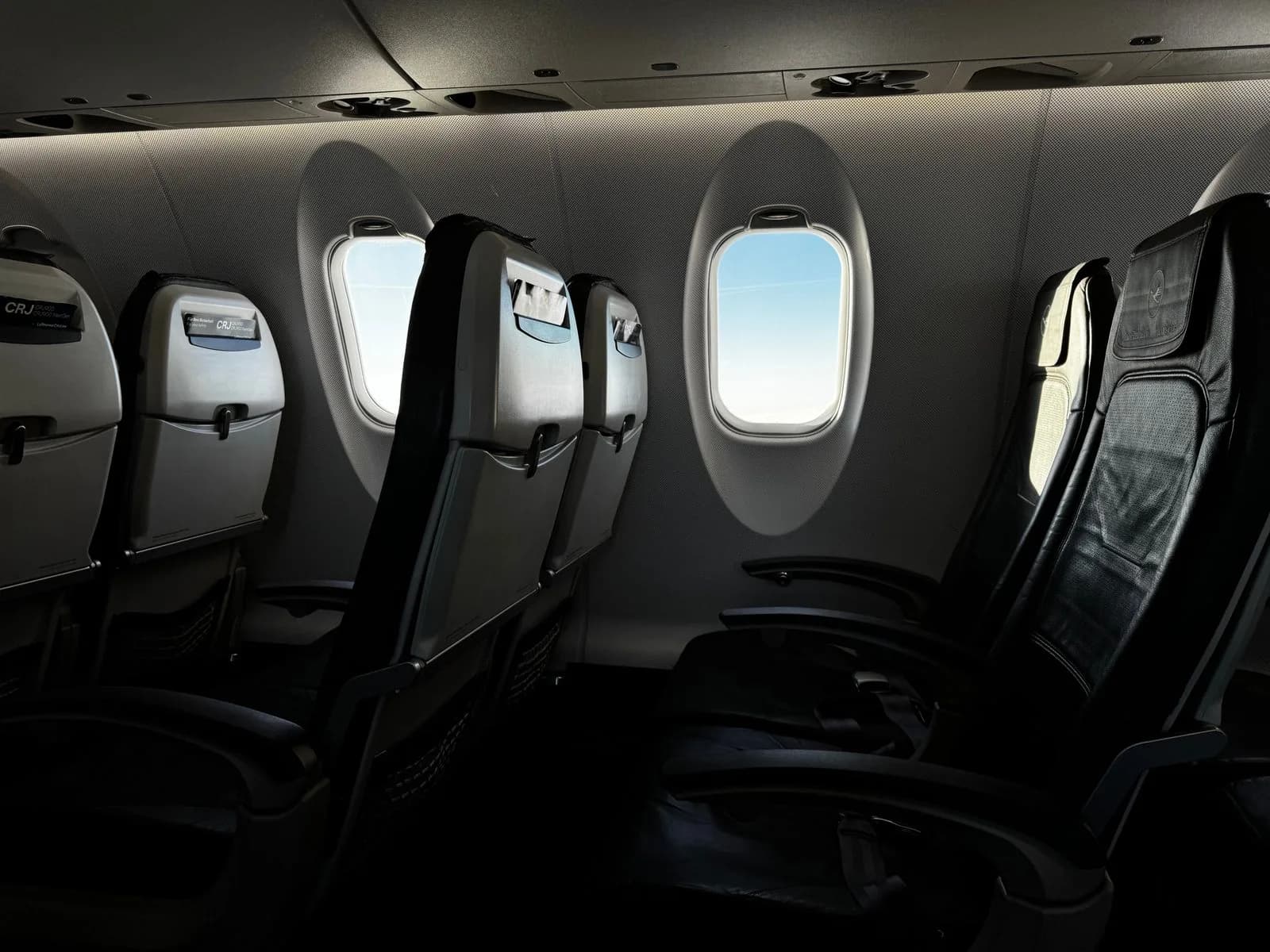
In cruise, you would probably notice very little. There may be a change in the engine note, a slight yaw as the aircraft swings a few degrees toward the dead engine before the pilots correct it, and then a gradual, deliberate descent to a lower altitude. Cabin lighting may flicker for a second while electrical load transfers to the other generator. That is usually the whole show.
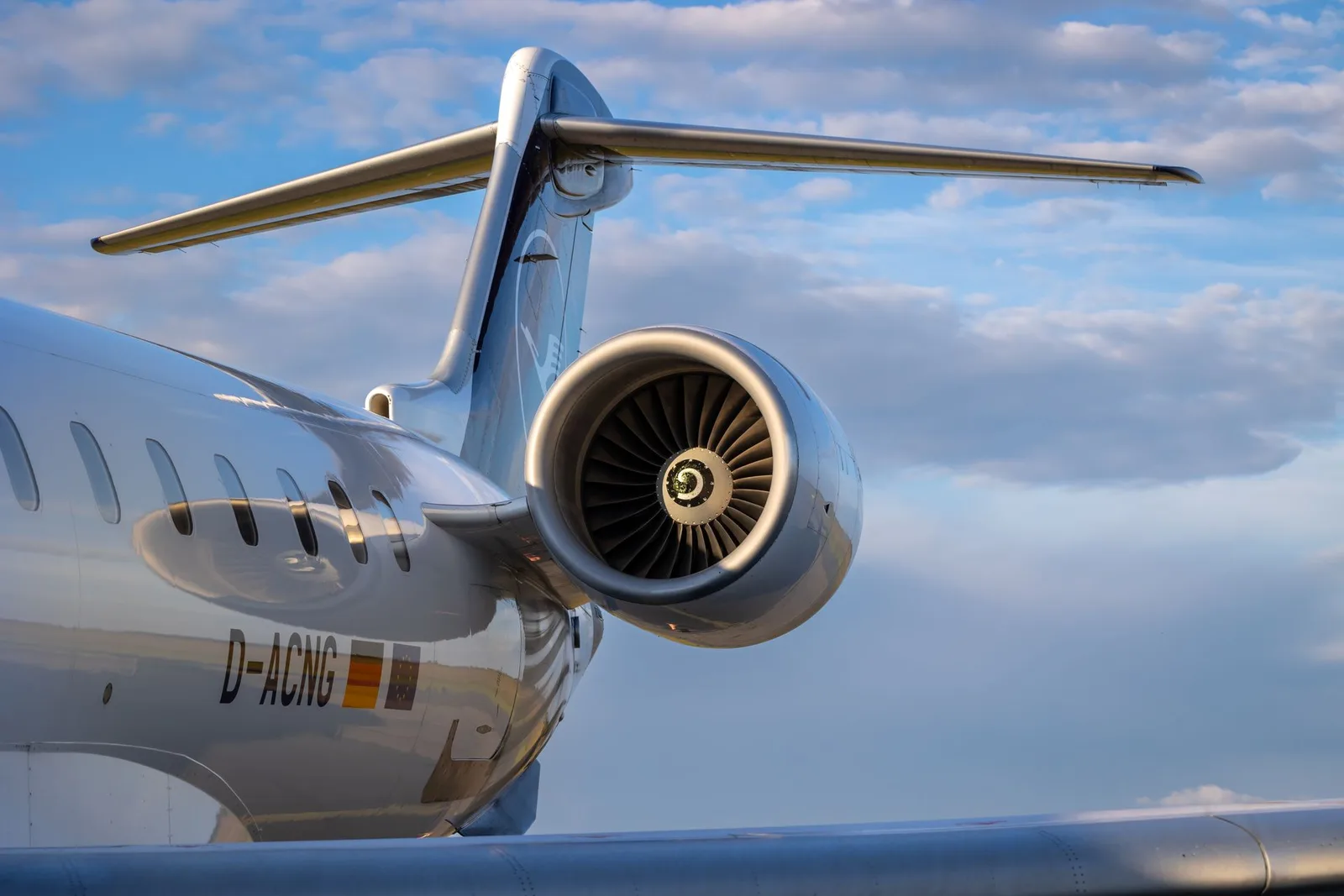
In the louder cases, and this is what makes the news, there can be a loud bang, a shudder, or a brief flash of flame from the engine as it surges. It sounds catastrophic from seat 24A. Mechanically it is not. Every engine is built inside a containment casing designed to keep a failure inside the engine, and every engine has its own fire suppression system that the pilots trigger from the flight deck with two switches.
In the cockpit, meanwhile, nothing chaotic is happening. One pilot flies the aircraft. The other runs the checklist. It is drilled so often that it is closer to muscle memory than to problem solving. Simple Flying's account of what an engine failure looks like from the pilot's perspective describes the same sequence: control the aircraft, identify the failure, secure the engine, then decide where to land.
Engine failure on takeoff: the V1 rule
Takeoff is the moment passengers worry about most, and it is also the moment that is planned in the most obsessive detail.
Before every single departure, we calculate a speed called V1. Below V1, if an engine fails, we abort the takeoff and stop on the remaining runway. Above V1, we continue the takeoff on the remaining engine, climb away, and come back to land. There is no hesitation and no debate about it, because the decision was made before the aircraft ever started rolling. The runway length required for the flight is calculated on the assumption that an engine will fail at the worst possible instant.
This is also why the aircraft is heavier on controls but perfectly flyable: the rudder is sized specifically to counter the asymmetric thrust of one engine out at low speed. It is not an improvisation. It is a number on a certification chart.
Over the ocean: what ETOPS really means
The fear that grows in the dark, on long haul, is a simple one: there is nothing but water beneath us for hours.
That is exactly the scenario ETOPS regulates. ETOPS certification defines how far a twin engine aircraft is allowed to fly from a suitable diversion airport, measured in flying time on one engine. ETOPS-120 means two hours. ETOPS-180 means three. The Boeing 787 holds ETOPS-330 and the Airbus A350 holds ETOPS-370, which is more than six hours of flight on a single engine. Those numbers are not marketing. They are demonstrated, and they come with far stricter maintenance requirements for the aircraft and the engines.
It has happened for real. On 17 March 2003, a United Airlines Boeing 777 flying from Auckland to Los Angeles shut down an engine over the Pacific after an oil leak, then flew 177 minutes on the remaining engine to a diversion landing in Kona, Hawaii. No injuries. That is not a survival story, it is a procedure being followed. As one aviation explainer summarizes the design philosophy, airlines build twins with a backup precisely so that this stays routine.
And if every engine stopped?
This is the question behind the question, so let me answer it directly rather than dodge it.
An airliner without engines is not a stone. It is a glider, and a very efficient one. A typical airliner glides around 15 to 17 metres forward for every metre it descends, which from a cruising altitude of 35,000 feet gives roughly 150 to 180 kilometres of range and around 20 minutes of flight time to find a runway. We break the maths down in what the glide ratio of a plane means.
It has been done. In 2001, an Air Transat Airbus A330 lost all fuel over the Atlantic and glided for roughly 19 minutes to a landing in the Azores. All 306 people on board survived. In 2009, an Airbus A320 lost both engines to a bird strike after departing New York and landed on the Hudson River with no fatalities. These events are famous precisely because they are vanishingly rare, and in every case the aircraft kept flying long enough to be landed.
What to do with this if you are an anxious flyer
Knowing the numbers rarely dissolves fear on its own, and I will not pretend otherwise. Fear of flying is not an information deficit, it is a nervous system reacting to sensations it cannot label. But facts do one specific and useful job: they give your rational brain something solid to hold while the emotional part settles.
So if you hear an unfamiliar engine note on your next flight, try this instead of scanning for danger. Name what you are hearing. Engines change power settings dozens of times per flight, and a change of pitch is a normal adjustment, not a warning. Look at the cabin crew, because they are the most reliable instrument on board and they know exactly what an actual problem sounds like. And remember that the two people up front practise the failure you are imagining every six months in a simulator, in far worse conditions than you will ever meet.
That is the honest summary. An engine failure is a serious event that the entire system, from certification to training to maintenance, is built to absorb. It is not the end of the flight. It is a diversion, a longer day, and a story you tell later.
Frequently asked questions
Can a plane fly with only one engine?
Yes. Every twin engine airliner is certified to take off, climb, cruise and land on a single engine. It loses altitude capability and speed, not the ability to fly. Pilots train this scenario in the simulator every six months.
How often do jet engines fail in flight?
Very rarely. The worldwide long haul fleet averages around one in flight shutdown per 100,000 engine hours, and the most reliable engine families reach one per 500,000 hours. Most airline pilots never experience one in an entire career.
What happens if an engine fails during takeoff?
It depends on the speed. Below the calculated decision speed V1, the crew rejects the takeoff and stops on the runway. Above V1, the crew continues the takeoff on the remaining engine, climbs away and returns to land. The runway length is calculated in advance for exactly this case.
Can both engines fail at the same time?
It is extraordinarily rare and usually requires a shared external cause such as a large bird strike or fuel exhaustion. Even then the aircraft glides, typically 150 to 180 kilometres from cruising altitude, which gives the crew time to reach a runway or a suitable landing site.
Is a four engine plane safer than a two engine plane?
No. Modern twins are held to stricter engine reliability and maintenance standards through ETOPS certification, and statistically they are at least as safe. More engines simply means more parts that could need attention.
Ready to stop dreading the sound of the engines?
If reading this helped, the next step is to find out where your own fear actually sits, because knowledge alone is rarely the whole answer. Our short questionnaire takes a few minutes and gives you an honest read on your profile: evaluate your fear of flying.
And if you want to go further before your next flight, our online fear of flying course is built by airline pilots and psychologists, module by module, at your own pace. No pressure, no timetable. The door is open whenever you are ready.